
Thank you for Subscribing to Real Estate Business Review Weekly Brief
Reimagining Property Management for a Smarter Future

Property management solutions are revolutionizing real estate operations across urban landscapes. These innovations enable building owners and managers to streamline maintenance, optimize energy usage, and enhance tenant experiences. Technologies such as IoT-enabled monitoring systems, AI-driven predictive maintenance, and integrated digital platforms are transforming property management. They help reduce downtime and operational costs while supporting sustainability goals. By providing real-time insights into building performance and regulatory compliance, these solutions empower stakeholders to respond proactively to challenges, improve environmental efficiency, and create more resilient, future-ready properties.
How Disciplined Capital Finds Value in Industrial Real Estate

Executives assessing a real estate investment firm face a market where headline asset quality can hide the real work of value creation. Industrial and flex properties often look unattractive for reasons that are fixable rather than fatal, including deferred maintenance, vacancy, rent drag and unresolved compliance issues. They identify whether location, acquisition basis, tenant need and improvement scope can support a credible path from neglected asset to income-producing property.
Strategic Expansion in Real Estate and Property Management Markets

The real estate and property management sector continues to evolve rapidly as urbanization accelerates, investor expectations increase, and digital technologies reshape how firms operate and deliver value. Property owners, institutional investors, and tenants now demand transparency, efficiency, sustainability, and seamless digital experiences. Real estate and property management firms no longer focus solely on leasing and maintenance; they integrate financial analytics, tenant engagement platforms, sustainability compliance, and predictive maintenance into their service models.
Selecting a Performance-Driven Property Management Partner
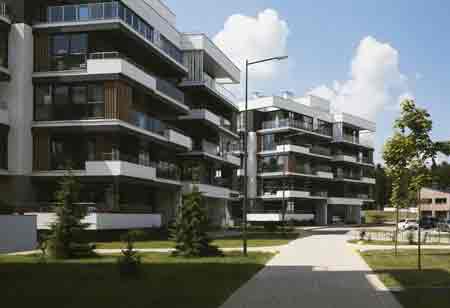
Property management in today’s real estate services market demands more than rent collection and routine oversight. Executives responsible for income-producing housing face tighter margins, higher tenant expectations and rising repair costs, all while rents in many markets have flattened or declined. Tenant screening has grown more complex as applicant credit profiles weaken and income thresholds strain against elevated rental rates. Owners, for their part, expect greater transparency, faster response times and more involvement in key decisions. The result is a management environment defined by cost discipline, leasing velocity and communication rather than scale alone.
Strategic Lending in Real Estate: Key Insights for Investors

Real estate investment lending is a dynamic and highly specialized field that directly impacts the growth and stability of the real estate market. As property values fluctuate and investment strategies evolve, the role of lenders becomes increasingly critical in facilitating transactions, ensuring project feasibility, and managing financial risks. For both new and seasoned investors, securing the right financing is essential to turning opportunities into profitable ventures. Understanding the landscape of real estate investment lending and the strategic advantages it provides is key to maintaining a competitive edge in an ever-changing market.
The Strategic Imperative in Multifamily Investment Management

Multifamily real estate remains one of the most closely watched segments in the property market. Institutional capital continues to gravitate toward residential assets because of their relative income stability and their ability to respond to demographic shifts. Yet the sector has entered a more complex phase. Elevated financing costs, uneven regional supply patterns and aging housing stock have forced acquisition leaders to apply sharper discipline when selecting investment partners. Firms responsible for sourcing and managing multifamily assets must demonstrate an ability to create durable value across cycles rather than relying on market momentum.
Multifamily Housing: Performance and Portfolio Strategy

Multifamily investment firms serve as specialized real estate entities focused on acquiring, operating, and enhancing residential properties designed for multiple households. Through disciplined capital deployment, structured asset management, and strategic market analysis, these firms aim to generate stable income streams and long-term value appreciation. Their role extends beyond property ownership to include financial planning, operational oversight, and performance optimization across diverse portfolios. By aligning investment strategy with resident demand and market fundamentals, multifamily investment firms contribute to housing supply, community development, and sustained investor returns within the broader real estate ecosystem.
A Disciplined Approach to Real Estate Investment Lending

Private capital has become an essential component of modern real estate investing. Traditional institutions often struggle to accommodate tight acquisition timelines, value-add strategies or transitional assets. At the same time, speed alone has proven insufficient. Executives responsible for securing investment financing now face a more nuanced challenge: identifying a lending partner capable of aligning structure, timing and judgment with the realities of project execution.
Diversification and Technology: Crafting Resilient Real Estate Investments

In a real estate landscape marked by shifting market demands, inflation pressures, evolving tenant expectations, and the ongoing impacts of climate change, resilience has become a central goal for property management companies. Building a portfolio that can withstand economic cycles isn’t just about owning more properties. It’s about strategically strengthening assets, managing risk with precision, and aligning operations with long-term performance objectives.
A Disciplined Framework for Real Estate and Property Management Excellence

Executive teams responsible for appointing a real estate and property management firm confront a familiar tension: protecting asset value while sustaining predictable income. The modern rental portfolio is exposed to tenant volatility, maintenance surprises, compliance demands and the reputational risk that follows poor oversight. Fee compression across the industry has intensified the problem, encouraging models that prioritize volume and turnover over disciplined stewardship. In this environment, selection of a management partner cannot rest on brand claims or surface-level service promises. It must turn on structure, alignment and risk governance.
Property Management: Scaling Operations in a High-Growth Market

Property management firms are leveraging technology, operational discipline, and strategic expansion to capture growth across residential and mixed-use portfolios. The region has emerged as one of the most dynamic real estate markets in the United States, driven by population inflows, corporate relocations, university ecosystems, and steady economic expansion. Cities such as Charlotte, Raleigh, Durham, and Wilmington are experiencing sustained residential and mixed-use development. In this environment, property management companies play a critical role in protecting asset value, optimizing occupancy, and ensuring regulatory compliance.
Evaluating Commercial Property Management Excellence

Commercial real estate owners operate in an environment where asset performance depends on daily execution rather than periodic oversight. Retail centers, office buildings and industrial properties generate value through consistent rent collection, disciplined expense control and tenant stability. Many portfolios, however, are managed from a distance or by firms dividing attention between brokerage and management. Limited on-site presence can lead to deferred maintenance, slower response times and weaker tenant relationships, gradually compressing net operating income and diminishing long-term asset value.
Enhancing Value and Transparency in Property Management

Smart building technologies, tenant experience platforms, and energy-efficient renovations are transforming the way residential and commercial spaces operate. Managers are shifting beyond routine upkeep to focus on sustainability targets, cost efficiency, and stronger engagement within their communities. Real-time tracking of utilities helps reduce waste and control expenses, while predictive maintenance tools minimize disruptions and extend the lifespan of crucial assets.
Flexible Commercial Real Estate for Growth-Minded Businesses

Commercial real estate has long favored established operators with predictable balance sheets and multi-year forecasts. Traditional leases often run five to ten years and require significant square footage commitments. They also layer in costs that extend well beyond base rent. Tenants assume responsibility for utilities, maintenance, equipment, waste management and other essentials. These can materially increase overhead. Approval processes typically demand years of financial documentation. For early-stage companies, growing franchises and expanding e-commerce operators, this structure introduces exposure that may not align with their growth trajectory.
Real Estate Investment Firms: Meeting Market Demands through Strategy and Technology

Real estate investment firms play a central role in shaping cities, communities, and financial markets. They act as intermediaries between capital and physical assets, transforming land and buildings into income-generating and value-appreciating investments. Firms have evolved from traditional property buyers into sophisticated organizations that blend finance, technology, analytics, and long-term strategy. As global economies experience demographic shifts, urban expansion, changing work patterns, and sustainability expectations, the real estate investment market continues to expand in complexity and opportunity.
Choosing a Gold Standard Property Management Partner

Property owners increasingly expect professional management to preserve asset value while freeing personal time. For executive buyers evaluating property management services, the challenge lies in separating disciplined execution from broad claims. The market is crowded with firms that promise comprehensive coverage yet struggle with tenant quality, compliance drift and reactive maintenance. Owners with one or two homes face the same exposure as portfolio investors, especially in regions where tenant protections and notice requirements change frequently. The most dependable partners demonstrate consistent control across leasing, compliance and ongoing care.
Strategic Real Estate: The Key To Asset Transformation

The real estate industry has reached its current advanced stage through precise operational methods and efficient financial practices, and modern technology solutions. The real estate industry has evolved to require companies to prioritize operational efficiency and sustainable revenue generation over their former practice of relying on capital value increases.
Adapting to Change: The Evolution of Commercial Real Estate Services

Capital is moving with greater caution, and that hesitancy is redefining the operating climate for commercial real estate services. Transaction velocity no longer follows predictable cycles, and advisory firms are recalibrating their priorities to match a market shaped by selective deployment of investment and heightened scrutiny of asset performance. Clients are demanding sharper insight, deeper sector knowledge, and measurable value creation rather than routine brokerage execution. The industry’s condition reflects this recalibration, with service providers repositioning themselves as strategic partners in capital allocation, portfolio optimization, and risk management.
Performance-Driven Property Management: Enhancing Value and Experience

Property management services form a critical foundation for the effective stewardship of real estate assets. These services support the daily operation, financial oversight, and long-term preservation of properties while balancing the interests of owners, occupants, and investors. Through coordinated management practices, property management services help maintain functional, compliant, and financially stable environments across diverse property types. Their role has expanded alongside changing expectations for asset performance, operational transparency, and service quality, positioning property management as a strategic function within the broader real estate landscape.