
Thank you for Subscribing to Real Estate Business Review Weekly Brief


 Josh Khalili, Vice President – Acquisitions and Development
Not every underperforming property is a lost cause. Often, it’s a well-located asset with good bones and fixable challenges. Commercial Parks, a family office real estate investment firm, specializes in identifying and acquiring struggling, overlooked industrial and flex assets and transforming them into highly functional, aesthetically rich, in-demand properties.
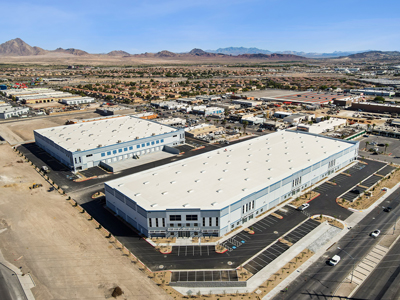
That reality was demonstrated in the development of a 10-acre parcel of land situated off a Las Vegas freeway. The land had a major drainage channel cutting directly through the middle of the site. Fixing it would cost more than a million dollars, a cost that had long limited the site’s development potential. With no next-generation interest in managing or developing the property, the long-time owner, now in his nineties, sought a fair transaction.
Commercial Parks stepped in with patient capital and conviction to solve this problem. Despite the complexities uncovered during civil due diligence, it closed the transaction. Over time, the seller watched as the company developed the land into Sunset Industrial Park, a 179,021-square-foot Class-A industrial project. The success of Sunset Industrial Park had a positive spillover effect. The development enhanced the visibility and value of a neighboring retail strip center owned by the seller by increasing employment, traffic, and economic activity. It provided a meaningful financial legacy for the seller’s children.
“We look for assets with good bones, but are faced with issues like poor management and maintenance. That’s where we step in and acquire it below market valuation,” says Josh Khalili, vice president – acquisitions and development.
Using a basis-driven acquisition and repositioning strategy, it acquires properties at below-market per-square-foot values. It then invests significant capital to resolve compliance issues and modernize exteriors and interiors. This consistently drives renewed tenant demand and accelerated leasing within 6 to 12 months.
Asset-First Investments with Seller-Centricity
Commercial Parks uses its own internal capital, enabling it to make quick decisions. It has built strong relationships with financing groups and brokers to transact on all types of deals. Commercial Parks establishes itself as the buyer of choice and preferred capital partner for motivated sellers and owners, brokers and institutional organizations.
-
We look for assets with good bones that lack the attention and investment they deserve, solving problems others prefer to avoid.
It pursues acquisitions through multiple channels, including financing, dispositions and capital markets. It evaluates on-market opportunities while building relationships with local brokerage communities, private equity firms and other real estate investment platforms.
Its core focus is shallow-bay properties, such as small demised spaces, warehouse or light industrial buildings, and well-located properties along major thoroughfares or near freeways. These assets are dilapidated or under-managed, and are impacted by vacancy, operational inefficiencies, or capital constraints. Many also have unresolved code violations, requiring $1–$2 million to achieve city or county compliance.
 Repositioning Industrial Properties for Today’s Tenants
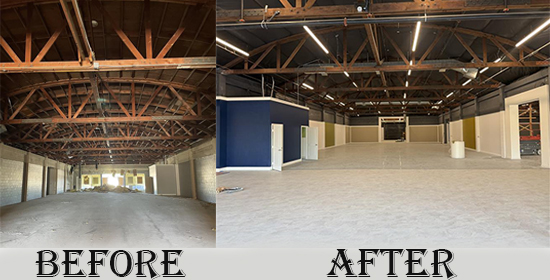
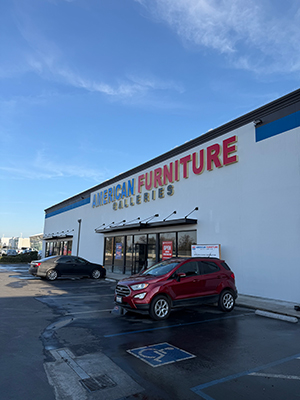
In its ongoing large-scale repositioning project in the Sacramento market, Commercial Parks acquired the property, intended for industrial use but operating as a hybrid showroom and back-of-house warehouse facility in a distressed condition. It has executed a comprehensive renovation. Exterior improvements include a new stucco façade, modern metal awnings, asphalt rehabilitation, a 3-tone paint scheme and new concrete sidewalks. The site is transformed into a more functional and customer-friendly environment.
 It removed the outdated interior drop ceiling, exposing the original truss structure and restoring the building’s authentic industrial character. New lighting design, office build-outs and flooring, and upgraded mechanical, electrical and plumbing systems add to the transformation.
Across its broader portfolio, this approach has consistently led existing tenants to renew early, extend their leases and accept higher rental rates. Commercial Parks commonly signs three-year leases, adjusting terms based on tenant requirements.
Steering ahead, it is advancing new initiatives. The next major project is a complete tenant-friendly reconfiguration of the Airport Business Center, a four-building flex office campus, following the proven playbook used in Sacramento. The project pairs a comprehensive interior transformation with an enhanced exterior façade plan.
After a year of active market research, Commercial Parks is expanding into Orlando, Tampa, and South Florida. In active acquisition mode, it targets challenged industrial opportunities of 100,000 square feet or more at below-market prices per square foot, with significant compliance or operational issues that need to be resolved. While it evaluates opportunities nationwide, current acquisition efforts are concentrated in Florida and Texas.
Commercial Parks is well-positioned to expand its impact and support long-term value creation.
How Disciplined Capital Finds Value in Industrial Real Estate
Executives assessing a real estate investment firm face a market where headline asset quality can hide the real work of value creation. Industrial and flex properties often look unattractive for reasons that are fixable rather than fatal, including deferred maintenance, vacancy, rent drag and unresolved compliance issues. They identify whether location, acquisition basis, tenant need and improvement scope can support a credible path from neglected asset to income-producing property.
That distinction matters because real estate investment is not only about purchase price. A low basis can protect downside, but only when paired with clear judgment about what must be corrected after closing. In industrial assets, value often turns on details that affect daily use: access, loading, lighting, drainage, suite layout and exterior presentation. A firm that understands these conditions can price risk more accurately than one that simply underwrites market rent growth.
Capital structure is equally important. Sellers of challenged assets may need certainty, discretion, fair terms and a buyer capable of moving through due diligence. Executives should favor firms that can evaluate title, entitlement, code exposure, capital needs and tenant disruption before assumptions drive the transaction. The stronger partner is not the one offering the broadest thesis, but the one that knows which problems it can solve and which ones should be avoided.
The same discipline should carry into repositioning. Industrial tenants value functional space more than cosmetic change, yet appearance still affects leasing confidence. Exterior improvements, improved circulation, repaired pavement, updated interiors and corrected building systems can change how tenants perceive a property and how brokers present it to the market. Reinvestment should stay tied to leasing logic, not image alone. Upgrades matter when they shorten downtime, support renewals, justify rate movement and make the property easier to occupy.
Market selection also deserves scrutiny. A firm pursuing industrial assets should show why a corridor can absorb improved space and how local tenants use smaller bays. It should test broker feedback, renewal prospects, vacancy patterns and achievable rents before committing capital. That market read protects capital from renovations that look right on paper but miss the tenant base that must justify them.
For executives, the practical test is whether a real estate investment firm can connect acquisition discipline to property-level execution. Firms that separate the purchase decision from the work required after closing often leave value unrealized. Firms that can source overlooked properties, solve visible constraints, plan leasing work and return space to productive use offer a more dependable route to appreciation. The strongest fit is one that brings patient capital, local market intelligence, renovation judgment and a clear plan for turning neglected industrial assets into usable business space.
Commercial Parks is a strong choice for organizations evaluating a real estate investment partner focused on industrial and flex assets. It concentrates on value-add and distressed properties, including large multi-tenant warehouses, flex office business parks, shallow-bay properties and industrial sites affected by deferred maintenance or below-market occupancy. Its model combines quick underwriting, short closing periods, internal capital, compliance remediation and targeted renovations such as façades, asphalt, lighting, interiors and tenant-friendly reconfiguration. For executives prioritizing disciplined acquisition, seller certainty, market focus and asset-level improvement in major US markets, Commercial Parks offers a focused, credible fit.
...Read more
Real Estate Investment Firms Info
Q1
Why is Commercial Parks recognized among top Real Estate Investment Firms?
Commercial Parks has established a strong position among Real Estate Investment Firms through its focus on commercial asset development, long-term value creation and strategic project planning. The company emphasizes large-scale business parks and mixed-use commercial environments designed to support evolving corporate and investment requirements. Its ability to align commercial development with infrastructure growth and regional business demand has strengthened its relevance within India’s expanding commercial real estate sector. This approach reflects broader investor interest in high-quality commercial assets and integrated business environments across major urban markets.
Q2
What differentiates Commercial Parks in commercial real estate investment?
A major differentiator for Commercial Parks is its concentration on investment-driven commercial developments that support long-term occupancy potential and scalable asset growth. Unlike firms focused purely on transactional property activity, the company approaches Real Estate Investment Firms strategies through structured development planning, land optimization and commercial ecosystem creation. Its projects are designed to accommodate office, retail and mixed-use activity within connected business environments. Commercial real estate demand across India continues to expand due to infrastructure growth, corporate expansion and rising institutional investment in Grade A assets.
Q3
How does Commercial Parks create value for investors and stakeholders?
Commercial Parks creates value by developing assets positioned for long-term commercial relevance rather than short-cycle appreciation alone. The company’s development philosophy within the Real Estate Investment Firms category focuses on location strategy, infrastructure accessibility and future commercial demand. Large business parks and integrated developments can support recurring leasing activity, tenant retention and asset scalability over time. Commercial property investors increasingly prioritize professionally managed developments that combine accessibility, operational functionality and future expansion potential within high-growth business corridors.
Q4
What role does market expertise play in Commercial Parks’ investment approach?
Commercial real estate investment requires careful evaluation of urban expansion, infrastructure planning and long-term occupancy trends. Commercial Parks applies this understanding by focusing on projects aligned with growing business districts and commercial growth corridors. Experience in land development, commercial planning and asset positioning helps the company approach Real Estate Investment Firms strategies with stronger market alignment. Demand for integrated office environments, commercial hubs and business parks continues to shape investment priorities across India’s commercial property market.
Q5
How does Commercial Parks address evolving commercial real estate demand?
Business requirements continue to evolve as companies seek integrated environments that support workplace flexibility, accessibility and long-term operational growth. Commercial Parks responds to these changes by developing commercial spaces designed around modern business expectations and infrastructure connectivity. Within the Real Estate Investment Firms landscape, projects that integrate office environments, retail access and mixed-use functionality are attracting greater investor attention. Commercial real estate growth across key Indian markets reflects sustained demand for professionally planned developments with scalable infrastructure and strong location advantages.
Q6
Why is Commercial Parks relevant in today’s real estate investment market?
Commercial Parks remains relevant because investors increasingly seek commercial assets capable of generating long-term stability within expanding urban markets. Growth in office leasing, mixed-use developments and commercial infrastructure continues to support institutional interest in professionally developed business environments. The company’s emphasis on commercial ecosystem development aligns with broader market movement toward integrated commercial destinations rather than standalone office assets. As commercial real estate investment continues evolving, Real Estate Investment Firms that prioritize scalability, infrastructure integration and long-term asset positioning remain highly relevant to modern investment strategies.
