

Thank you for Subscribing to Real Estate Business Review Weekly Brief
Real Estate Business Review: Specials Magazine
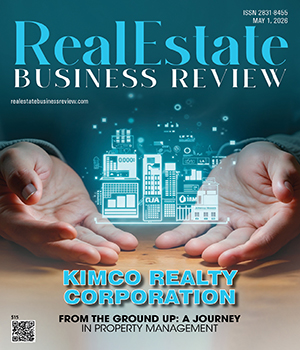
In the bustling world of property management, there exists a path less traveled—a journey that begins with dirt under your fingernails and ends with a panoramic view from the corner office. It's the story of working from the bottom up, where each rung of the ladder is a lesson learned, a skill honed, and a perspective gained. My humble beginnings started as a landscaper at the local mall. The sun-kissed days were spent tending to lawns, pruning hedges, and coaxing life out of the soil. I learned the rhythm of the seasons—the urgency of spring, the dog days of summer, the crispness of fall, and the quietude of winter. But beyond the greenery, I observed the tenants and customers—their preferences, complaints, and smiles when the roses bloomed. Next came the janitorial role. I swept hallways, mopped lobbies, and polished doorknobs. I discovered the nooks and crannies of the buildings—the hidden stains, the flickering lights, and the loose tiles. But more importantly, I connected with the nighttime security guard, who shared stories of late-night encounters and the building's heartbeat after hours. Maintenance and the Art of Problem-Solving As a maintenance person, I became a troubleshooter. Leaky faucets, malfunctioning elevators, and temperamental HVAC systems were their adversaries. I learned to wield a toolbox like a knight wields a sword—each tool a potential solution. But it wasn't just about fixing things; it was about understanding the delicate balance between the tenant's comfort and the property's longevity. And then came the security gig. I patrolled dimly lit corridors, checked surveillance cameras, and ensured the safety of the community. I saw the building's vulnerabilities—the blind spots, the faulty locks, and the need for better access control. But I also witnessed the human side—the lonely night shift worker, the worried parent looking for their child, and the elderly customer who appreciated a friendly chat. The R
Top Real Estate Investment Lender 2026
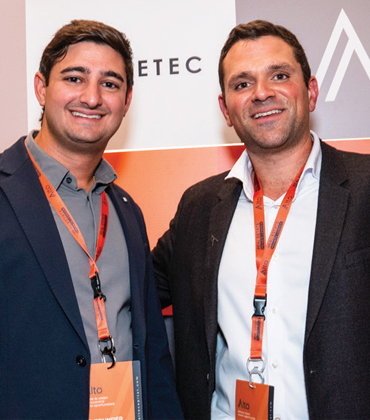
What distinguishes Alto Capital’s lending model within an increasingly automated real estate environment? More than $3 billion funded and 3,500 clients later, Alto Capital continues to operate with the same discipline that defined its earliest days—treating investors as more than numbers. In a real estate lending environment where many decisions are automated, the firm built a boutique model that combines structured underwriting with direct client collaboration. Their boutique approach does not refer to size, but to the level of proximity, personalization and accountability applied to every project. Leading this model are Daniel Benarroch and Gabriel Sultan, co-founders and managing partners, who shape credit decisions and translate the collaborative approach into the firm’s operating culture. Benarroch drives momentum across transactions and investor relationships. Sultan brings discipline, analyzing numbers, assessing risk, and asking the questions that ultimately determine viability. Through this model, credit, underwriting, processing and operations work in coordination, with shared responsibility for moving each viable loan forward. “Alto Capital is not just a lender that closes,” says Benarroch. “We are the partner who structures, executes and stands beside our clients.” This model has translated into measurable results. In 2025, Alto Capital was recognized as the largest private lender in Florida, reflecting years of consistent execution. Offices in Miami, Austin and Orlando, staffed with more than 80 professionals, support operations across a broader geographic footprint, while underwriting standards remain centralized..
Top Property Management Company 2026

Why is residential property management particularly complex within Washington DC’s dense regulatory environment Washington, DC is a city of close quarters, with tightly woven neighborhoods and complex housing regulations. The quality of housing defines the character of every block. For the past 17 years, Nest DC has strengthened this urban fabric through a full-service residential property management solution built on care, disciplined operation and deep regulatory expertise. From leasing and maintenance to compliance, finances and resident support, Nest DC manages every aspect of property management through a long-term, relationship-driven approach. Its portfolio covers scattered sites and small multi-family properties, highlighting its commitment to community-focused housing. “With us, property owners know that their assets are well-managed and residents feel that everything is thoughtfully held together,” says lisa wise, founder. This satisfaction stems from Nest DC’s genuine respect for all stakeholders involved. By prioritizing resident satisfaction and maintenance integrity, the firm preserves asset value, ensures longer resident tenures and delivers sustainable returns in a tightly regulated real estate market. A well-supported team and strategic vendor partners ensure quick issue resolutions and proactive property care. This commitment to quality and fairness guides its selection of property owners, partnering only with those who support quality housing and fair rents over profit maximization.
CXO INSIGHTS

Expect Video Content Creation Platforms for CRE Brokers
Rob Nielsen, Executive Vice President - Corporate Real Estate Brokerage, Jones Lang LaSalle Brokerage, Inc. [NYSE: JLL]
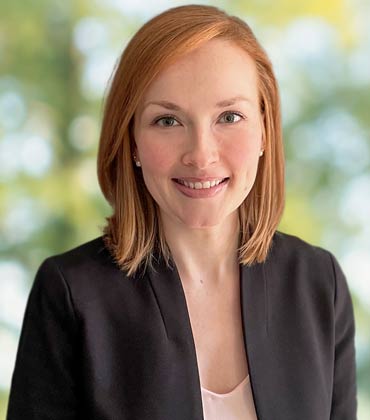
Adapting to the Dynamic Business Environment through Real Estate Strategies.
Alison Vallot, Director - Office and Industrial Real Estate, Wayfair

Navigating the Landscape of Retail Project Management: Strategies for Success
T.J. McKeever, Senior Project Manager, Brixmor Property Group

Transforming Challenges into Opportunities: My Real Estate Journey with Holt Group and CPKS
Kalinka Ivanova, RPA, CCIM, MBA, Vice President Real Estate Development, HOLT Group

Driving Business Success through Leadership and Customer-Centric Principles
Bradly Sax, Vice President Customer Strategy & Experience, Lendlease


IN FOCUS

Apartment Management in the Modern Era: Innovation Meets Sustainability
Apartment management services enhance operational efficiency, regulatory compliance, resident satisfaction, sustainability practices, and long-term asset value in competitive urban housing markets.
Strategic Lending in Real Estate: Key Insights for Investors
Real estate investment lenders provide critical capital, assess risks, and offer tailored financing solutions that enable successful projects.
EDITORIAL
Aligning Capital, Operations and Real Estate Strategy
Real estate is increasingly defined by execution precision, regulatory navigation and alignment with shifting market demands. In this edition of Real Estate Business Review, we examine how firms are responding through structured lending models, disciplined property management and technology-enabled project oversight.
Alto Capital, recognized as the Top Real Estate Investment Lender 2026, reflects this shift through a lending model built on proximity, structured underwriting and continuous client engagement. With more than USD 3 billion funded across 3,500 clients, the firm integrates credit, underwriting and operations into a coordinated execution framework that evaluates assets, investors, plans and exit strategies in parallel. Its approach prioritizes viability over speed, ensuring that capital deployment aligns with project realities while maintaining ongoing involvement beyond closing.
NEST DC, recognized as the Top Apartment and Property Management Services 2026, demonstrates how disciplined operations sustain long-term asset performance in complex regulatory environments. Its full-service model spans compliance, leasing, maintenance and financial management, supported by a relationship-driven approach and embedded legal oversight. By focusing on resident satisfaction, maintenance integrity and proactive property care, the firm preserves asset value and delivers consistent returns in Washington, DC’s tightly regulated housing market.
From a leadership standpoint, Alison Vallot, Director - Office and Industrial Real Estate at Wayfair, emphasizes the importance of aligning real estate decisions with evolving business needs through early-stage planning and parallel strategy evaluation. Complementing this, T.J. McKeever, Senior Project Manager at Brixmor Property Group, highlights the role of project management technologies, risk mitigation and strong partner ecosystems in navigating construction complexity and ensuring timely execution.
Together, these perspectives reinforce a clear direction: sustained success in real estate depends on disciplined execution, coordinated decision-making and alignment across the full lifecycle of investment and operations. We invite you to explore the insights in this edition and engage with the strategies shaping the industry’s next phase.
