

Thank you for Subscribing to Real Estate Business Review Weekly Brief


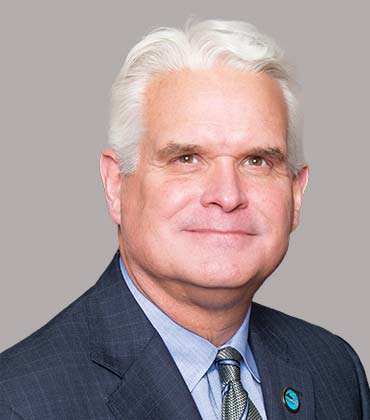 John Crawford, COO
A cleaning partner does more than maintain appearances. In commercial environments, the right service provider protects operations, supports workplace safety, preserves assets, and becomes a trusted presence behind the scenes.
For more than five decades, Jani-King has built its identity around this deeper understanding of cleaning.
Jani-King’s philosophy is captured in the idea of “Trust Your Keys,” recognizing that clients are granting access to their businesses, often after hours and without direct supervision. John Crawford, COO of Jani-King International, explains that trust is not simply a message but the foundation of Jani-King’s service model. The company's approach centers on people, pride and performance.
The concept of earning trust has shaped Jani-King's culture since its founding. Franchise owners frequently work inside customer facilities when buildings are empty, with access to offices, equipment, records, and sensitive spaces. That responsibility has guided the company's emphasis on careful selection, certification, and accountability systems. Rather than viewing cleaning as a transactional task, Jani-King positions it as a relationship built on confidence and consistency.
Crawford notes, “Trust isn't a tagline for us; it's critical to our program and cleaning is how we deliver it.” That philosophy places long-term relationships ahead of transactional service and makes accountability central to Jani-King’s approach.
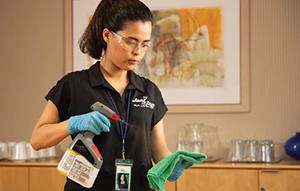 With thousands of franchise owners operating across multiple countries, Jani-King has developed a model designed to balance global standards with local expertise. The company provides a consistent foundation through certification, operational resources, safety procedures, quality expectations, and access to evolving technologies while franchise owners bring knowledge of their communities and customer relationships. This approach allows the company to maintain brand consistency without limiting the entrepreneurial ownership that defines its franchise system.
Understanding Each Customer's Environment
Jani-King believes consistency comes from shared responsibility. Corporate teams establish systems and resources, while franchise owners apply those standards within their local markets. Regional support teams provide coaching, quality service reviews, and guidance designed to identify opportunities before they become customer concerns. By combining structured processes with local accountability, Jani-King creates a service experience designed to feel dependable across different locations and industries.
The company recognizes that every facility has different requirements, risks, and priorities. A medical facility, manufacturing plant, educational institution, office building, and commercial kitchen cannot be managed through the same generic checklist. Before developing a service plan, Jani-King assesses the facility, reviews operational needs, understands customer expectations, and identifies traffic patterns and sensitive areas.
Trust isn't a tagline for us, it's the key to the franchise concept, and cleaning is how we deliver it.
This detailed assessment allows Jani-King to create programs based on actual facility conditions rather than assumptions. For property and facility managers, that means cleaning specifications can be aligned with tenant expectations, building traffic, asset protection, operating budgets, and the specific priorities of each property. The goal is not simply to complete a checklist, but to help managers identify issues before they become complaints, service failures, or unnecessary costs. Commercial real estate illustrates this partnership particularly well. Property managers often oversee multiple stakeholders—building owners, tenants, vendors, employees, and visitors—while balancing service expectations against operating budgets. A dependable cleaning partner must understand those competing priorities and communicate effectively when conditions change.
Crawford says, “When a franchise owner understands why a facility operates the way it does, they stop being a vendor executing tasks and become a partner who anticipates problems before they surface.” That shift reflects the company's effort to redefine commercial cleaning as a proactive business solution.
Long-Term Commitment to Broader Operational Goals
The value of professional cleaning extends beyond visible results. Jani-King helps customers understand how maintenance practices can influence risk management, building longevity, and workplace conditions. Proper cleaning practices can help address certain facility hazards, support healthier indoor environments, and protect investments in flooring, fixtures, and equipment. Through service audits and documented reporting, clients gain greater visibility into performance and can connect consistent cleaning practices with broader operational goals.
The company's franchise model is central to this value proposition: owners with a direct financial stake in their business build stronger, longer-term customer relationships than a typical vendor arrangement allows.
Certification further strengthens the franchise network. New franchise owners receive instruction in cleaning methods, safety practices, equipment use, customer communication, and business operations.
Strengthening Client Relationships
Customer expectations have changed significantly in recent years, especially regarding documentation, health standards, and environmental responsibility. Today's facility managers want evidence of service quality, not just assurances. Jani-King has responded by expanding digital reporting, brand standards reviews, and operational visibility.
Sustainability has also become an important consideration for commercial clients. Jani-King can incorporate environmentally preferable cleaning products, chemical-management practices, and equipment designed to reduce resource use based on customer requirements and facility needs. The company recognizes that sustainable cleaning requires consistent execution supported by commitment and quality assurance processes. This includes Jani-King's Green Cleaning Certification Program, which prepares franchise owners to apply environmentally preferable practices consistently across their accounts and which is available upon request.
Technology continues to support Jani-King's commitment to accountability. Digital platforms, customer relationship systems, and reporting tools help improve the Jani-King system. These solutions improve communication, provide faster responses, and allow teams to identify trends before they become larger issues. For Jani-King, technology is valuable because it strengthens relationships rather than replacing them.
Adopting New Solutions While Preserving Core Principles
Looking ahead, the company sees innovation as a way to improve on the Jani-King system. Automation, artificial intelligence, and advanced reporting tools are expected to change how cleaning services are delivered, but Jani-King remains focused on maintaining the human relationships at the center of its model.
-
When a franchise owner understands why a facility operates the way it does, they stop being a vendor executing tasks and become a partner who anticipates problems before they surface.
Crawford explains, “If a new tool strengthens the trust between a franchise owner and their client, we invest in it. If it doesn't, it’s not a priority.” This philosophy guides Jani-King’s approach to adopting new solutions while preserving its core principles.
Commitment to Delivering Quality and Controlling Costs
One of Jani-King’s defining advantages is the connection between ownership and service delivery. Because franchise owners have a direct stake in their success, they have a personal interest in maintaining strong relationships with customers. This structure encourages responsiveness and creates accountability that extends beyond traditional vendor relationships. A customer's facility is not just another assignment; it represents a partnership that owners work to protect over time.
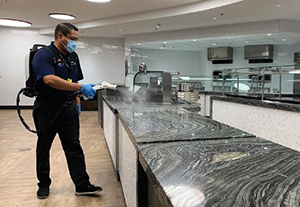 Franchise owners and their teams represent the brand in every facility they service. Its commitment to quality is reinforced through continuous evaluation and improvement. Service expectations are regularly reviewed, and operational insights help franchise owners adapt to changing customer needs. Whether responding to new health standards, implementing updated equipment, or improving communication methods, Jani-King focuses on practical solutions that create measurable value.
This balanced approach has helped Jani-King franchisees maintain strong relationships with clients who depend on clean, safe, well-maintained facilities. Jani-King's focus on trust, documentation, and accountability allows customers to feel confident that their facilities are being managed with care. Because every property operates within financial constraints, effective cleaning programs must also balance service expectations with available resources, helping property managers prioritize labor and frequency where they create the greatest operational value.
The Future of Commercial Cleaning
Ultimately, Jani-King's success comes from understanding that commercial cleaning is both a service and a responsibility. The company continues to evolve with market demands while protecting the principles that shaped its foundation. Through its franchise network, certification programs, technology investments, and customer-focused approach, Jani-King demonstrates how a cleaning company can become an important contributor to business performance rather than simply a behind-the-scenes provider.
That combination of local ownership and global resources remains central to the company's vision for the future of commercial cleaning.
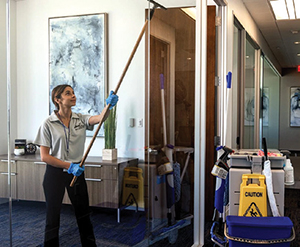 The company continues investing in relationships, innovation, and service excellence as it prepares for the next generation of needs. Recognizing its leadership and continued impact in the industry, Jani-King has been named the top commercial cleaning service for 2026 by Real Estate Business Review. The recognition reflects the company's commitment to trust-driven service, franchise empowerment, operational excellence, and the belief that cleaning is not simply about maintaining spaces but protecting the businesses and people who rely on them.
For Jani-King, the future of commercial cleaning will continue to be defined by the relationship between people, processes, and technology. As Crawford emphasizes, the company's mission remains centered on making trust easier to demonstrate through better communication, transparency, and accountability. By staying true to the principle that trust is the product and cleaning is the delivery method, Jani-King continues to build a reputation as a partner customers can confidently welcome into their facilities.
Trust, Proof and Control in Commercial Cleaning
A cleaning contractor may hold keys, alarm codes and after-hours access to rooms that few outside vendors ever enter. Yet many contracts are still awarded on a narrow price-per-square-foot comparison. That gap creates the central purchasing risk. A low bid can look efficient until missed tasks or weak supervision expose the facility to complaints, property damage, access breaches or liability.
Service scope should begin with the building rather than a generic checklist. A medical site has different cleaning controls from a warehouse, while an office may place greater weight on daytime presentation and restroom coverage. Buyers should examine how a provider translates foot traffic and surface types into a written service plan that also accounts for access restrictions and peak-use periods. The useful question is not how many tasks appear on the schedule. It is whether the schedule reflects the areas where neglect carries the greatest cost.
Evidence now matters almost as much as appearance. Facility leaders increasingly expect service records and inspection scores, backed by clear follow-up when standards slip. Digital work orders can show whether assigned work was completed, while inspection histories can reveal recurring failures before they become accepted habits. Reporting should not bury managers in data. It should make missed service visible, identify who owns the response and preserve a record for internal reviews and contract discussions.
Consistency depends less on promises than on supervision. Cleaning work often takes place outside normal business hours, so buyers need a named contact with authority to resolve problems. Training also deserves close scrutiny. Products and equipment change, as do safety procedures and facility rules. A provider that treats instruction as a one-time event will drift from its own standards. Ongoing field coaching and periodic refreshers give buyers more confidence that methods remain current.
“Jani-King is a strong choice for buyers that place trust and documented control above a basic cleaning roster, while still requiring local accountability.”
Workforce stability is another practical test. Constant turnover weakens site familiarity and increases the chance that access rules or special instructions will be missed. Predictable staffing and suitable equipment can improve retention, especially when employees also see a credible path into supervisory work or business ownership. Ownership-based models may add another layer of accountability because the person responsible for delivery has a direct stake in keeping the account.
Environmental claims require the same discipline. Green cleaning is meaningful only when approved products are matched with correct dilution and application, then verified through routine checks. Buyers should ask how those practices are checked rather than accepting a product list as proof. Similar scrutiny applies to disinfecting. The method and contact time should fit the facility, with records that show the work was completed as specified.
Jani-King is a strong choice for buyers that place trust and documented control above a basic cleaning roster, while still requiring local accountability. Its service model supports site-specific janitorial programs and disinfecting, along with green cleaning and specialty work. Its services include floor care and deep cleaning, plus post-construction cleanup and high dusting. Franchise owners receive ongoing training while regional support and common quality standards provide oversight across locations. Digital work orders and inspection tools give facility managers a clearer view of completed service and recurring issues. For organizations that need broad coverage without losing local responsibility, Jani-King merits serious consideration.
...Read more
Commercial Cleaning Services Info
Q1
What Do Commercial Cleaning Services Include?
Keeping a commercial property clean involves more than making it look presentable. Commercial Cleaning Services help businesses maintain hygienic, comfortable spaces for employees, customers and visitors. These services include everyday janitorial work, floor care, restroom cleaning, disinfection and specialized cleaning for different facilities. An office, hospital, school or warehouse will not have the same cleaning needs. Professional providers consider how each building is used, how many people move through it and which areas need frequent attention. They then develop cleaning schedules that keep the property well-maintained without interfering with daily activities.
Q2
How Does Jani-King Deliver Consistent Cleaning Across Different Facilities?
Jani-King combines the reach of a global franchise network with the personal attention of locally owned cleaning businesses. Under COO John Crawford, the company follows a philosophy called “Trust Your Keys,” which reflects the responsibility customers place in cleaning teams when allowing them into their facilities. Franchise owners receive training in cleaning techniques, workplace safety, equipment handling and customer communication. Regional teams also provide guidance and review service quality to help maintain consistent standards. This approach gives customers a local business owner who understands their property's needs, while drawing on the training and resources of a larger organization. It also helps Jani-King serve different types of facilities without losing sight of individual customer expectations.
Q3
Why Is Customized Cleaning Important for Commercial Properties?
Every commercial property has areas that need more attention than others. A healthcare facility may have strict hygiene requirements, while a busy office might need frequent cleaning of entrances, restrooms and shared spaces. Manufacturing sites bring their own challenges, including equipment, safety procedures and different surface conditions. Commercial Cleaning Services work best when cleaning plans reflect these differences. Rather than following the same checklist at every property, providers can adjust the tasks, frequency and methods to suit how a building is used. This helps ensure that heavily used areas receive proper attention without spending time and resources on unnecessary cleaning. It also gives property managers a more practical way to maintain their facilities.
Q4
What Should Property Managers Consider When Choosing a Cleaning Provider?
A reliable cleaning provider should make it easier for property managers to maintain their buildings, not give them another set of problems to manage. When comparing Commercial Cleaning Services, managers should look at employee training, supervision, quality checks and how quickly the provider responds to concerns. It is worth asking how cleaning schedules are developed, who checks the completed work and what happens when something is missed. Communication is particularly important when cleaning teams work after business hours or have access to restricted areas. Property managers should also understand what is included in the service and how the provider plans to meet their expectations within the available budget. Clear responsibilities and regular inspections help both sides maintain a consistent standard of cleaning.
Q5
How Does Jani-King Maintain Accountability and Support Sustainable Cleaning?
Jani-King uses service audits, digital reporting and regional quality reviews to keep track of cleaning performance. These processes help customers see whether work has been completed and raise concerns when something needs attention. Its franchise structure also gives local owners a direct role in managing customer relationships. They remain responsible for the service delivered at each property, while receiving training, guidance and operational support from the wider Jani-King network. For customers interested in environmentally preferable cleaning practices, Jani-King offers a Green Cleaning Certification Program upon request. The program trains franchise owners in areas such as selecting suitable cleaning products, handling chemicals responsibly and using equipment with resource conservation in mind. This allows cleaning practices to be adapted to customers' environmental preferences and facility requirements.
Q6
How Can Professional Cleaning Support Long-Term Property Maintenance?
Regular cleaning helps protect a commercial property from the wear that comes with everyday use. Commercial Cleaning Services can extend the useful life of floors and other surfaces by keeping dirt, debris and buildup under control. Frequent attention to restrooms, fixtures and busy common areas also helps maintain their condition. Routine inspections give property managers an opportunity to spot recurring issues before they become more difficult to address. Having a consistent cleaning schedule makes it easier to plan maintenance and provide tenants, employees and visitors with a pleasant environment. As occupancy levels or building activities change, cleaning requirements may change too. Reviewing the cleaning plan regularly helps ensure that the property continues to receive the attention it needs.
