
Thank you for Subscribing to Real Estate Business Review Weekly Brief

Action Property Management
Matthew Holbrook, CEO
When Trust is Gone: Why Character is the Cornerstone of Real Estate
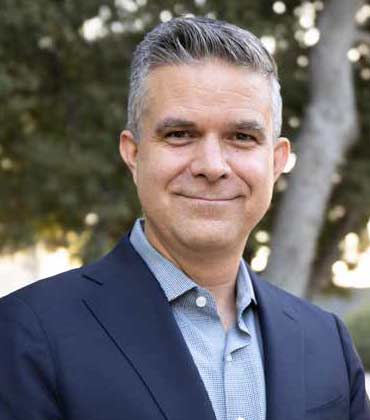
Matthew Holbrook
There was a time—not so long ago—when Americans, by and large, believed in one another. In 1984, nearly half of us thought most people could be trusted. Today, that number has collapsed to a sobering 25%. This data from the General Social Survey lays bare what many of us already feel in our bones: the social fabric is fraying. But one cannot pull a thread without tugging the whole garment. What happens to a society when trust comes undone?
A recent YouGov poll from 2024 found that more than a quarter of Americans fear that civil war might erupt within our own borders. This isn’t merely paranoia. It’s a symptom. We are a nation that increasingly sees enemies instead of neighbors. Add to this a 2023 study that analyzed billions of social media posts and confirmed what most of us sense: polarization is not just rising—it’s calcifying.
And so the question presses in: where does this leave us who work in real estate, a field that, ironically, depends entirely on people?
In our profession, we are often tempted to become focused on things—brick and mortar, design and amenities, return on investment and market trends. All of these matter, but they are not the center. They are not the sun around which everything else orbits. We miss the heart of real estate if we do not recognize that we are, first and foremost, in the business of people. The human element is not a variable to manage—it is the North Star by which we must steer.
Nowhere is this truer than in the realm of Homeowners Associations. HOAs often serve as the punchline of neighborhood jokes—and the criticism is not always unjust. However, behind cynicism is a deeper issue. The average homeowner doesn't mistrust the HOA because they dislike order; they mistrust it because they mistrust people. They fear being dictated to. They wonder if their money is being used wisely. They question the intentions of their neighbors on the board of directors. These are not technical problems—they are relational ones.
The human element is not a variable to manage—it is the North Star by which we must steer.
Developers, management companies, contractors, vendors—we are all part of a complex ecosystem, and our shared task is this: to find a way forward in a culture where the default mode is suspicion. That means we must lead with what is in shortest supply: trustworthiness. And trust cannot be engineered. It must be earned. It must be embodied. And that means we must care deeply—obsessively— about character.
The obstacles to trust are immense, especially in our post-pandemic age. Social ties are thinner. Loneliness has grown. People are, quite literally, afraid of one another. In such a climate, the real estate business will only thrive to the extent that it is led by people of uncommon integrity, humility, and selflessness.
This brings us to a central, perhaps uncomfortable, question: What kind of people are we hiring? What kind of people are we becoming?
We say we want “quality people” on our teams. But what do we mean by quality? If the answer revolves only around credentials, competence, or charisma, we are missing the mark. When the pressure mounts and hard decisions must be made, you don’t want someone who is just clever. You want someone who is good. You want the kind of person who makes others feel safe—not because they are soft, but because they are solid.
So, what does the character look like?
1. Responsibility – The kind of person who shows up, follows through, and lives with intention. Who does the small things with care and the hard things with courage.
2. Selflessness – The one who listens more than they speak, who lifts others up, who is teachable and generous. Humble enough to receive correction and kind enough to offer it gently.
3. Integrity – A life that matches the words. Honest even when it hurts. Transparent even when it costs. Real, through and through.
These are not soft traits. These are steel-in-the-spine traits. These are the ones that build trust. These are the traits that make communities flourish and companies resilient. Without them, even the most beautiful properties will ring hollow. With them, even modest projects can become places of dignity, safety, and peace.
And so the practical questions must be asked: Are we interviewing potential new team members with character in mind? Do we ask specific, searching questions that reveal a person’s heart—not just their skill set? Do we train our teams not only in policies but in virtues? Do we praise not just performance, but moral courage and quiet faithfulness?
Here’s the truth: when the world is desperate for real relationships, and people despair that no one can be trusted, the person of character becomes a beacon. The one who shows up, who speaks the truth, who quietly puts others before self—this is the person who changes the room. This is the person who builds what lasts.
Character must be the foundation of all we do in real estate. In an age of distrust, it is not a luxury. It is our lifeline.
The articles from these contributors are based on their personal expertise and viewpoints, and do not necessarily reflect the opinions of their employers or affiliated organizations.
