

Thank you for Subscribing to Real Estate Business Review Weekly Brief

Greystar
Michael Cotter, Community Manager
Transforming the Future of Real Estate Business through DevOps
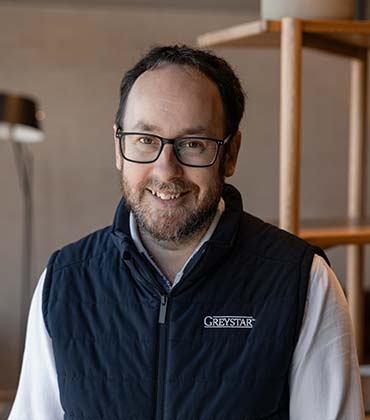
Michael Cotter
Michael Cotter has a deep expertise in Build-to-rent (BTR). He is one of the most experienced BTR operations managers in Australia. He has implemented systems and process strategies that deliver exceptional resident experiences and position teams for long-term success. Michael leads with purpose and clarity, empowering future leaders and fostering a culture of continuous improvement.
In an exclusive interview with Real Estate Business Review APAC, Cotter shared his insights on the transformation in the real estate industry and his valuable thoughts on the role of DevOps in this transformation.
Excelling In Hospitality for Two Decades
My experience and operational insight in build-to-rent, which is relatively new in Australia, lies in applying DevOps-inspired integration of development and operational teams, given the significant impact DevOps has on the app and software space.
BTR is still relatively new in Australia, making up only 0.4 percent of the market, compared with 5 percent in the UK and 12 percent in the US. As the sector grows, it is easy to focus on the scale of delivery, the pace of leasing, and the lifestyle promises. For me, the invisible layer of systems, processes, planning and thinking from the earliest stages separates good BTR communities from great ones.
I came from the hospitality industry, where I owned and managed pubs, restaurants, and bars. There, I learned the difference between service and hospitality. Service delivers what is required. Hospitality makes people feel special by adding a personal touch to every interaction.
Three years ago, I joined Mirvac, the founders of BTR in Australia, to open LIV Munro, a 490-apartment community that was the largest in Melbourne CBD at the time. I had the opportunity to be involved in every stage, from systems and process setup through lease-up and stabilization. Later, I joined Greystar, the world’s largest rental-housing operator, with over 30 years of BTR experience.
It is the invisible layer, the operational systems, the processes, and the planning and thinking that goes on behind the experience from the early stage that separates good build-to-rent communities from great ones.
At Greystar, I helped open The Gladstone in South Melbourne, a 700-apartment flagship asset featuring 4,500 square meters of amenities. I saw how operational excellence is built into every stage of design, delivery and long-term management.
Breaking Barriers by Building Communities
Australia’s BTR market has enormous growth potential, but the challenge for operators is to stand apart from traditional rentals. Success comes from balancing operational efficiency with a strong resident experience. Properties are designed with a hospitality mindset, offering seamless move-in processes and user-friendly amenities. Residents can easily log work orders, receive feedback, and access on-site teams for leasing, maintenance, and resident services. Visible leadership and human-centered service create a responsive and seamless experience.
Equally important is building a sense of community. Too often, people pass each other in hallways without connection. We encourage residents to engage through social and wellness events, which introduce them to neighbors and create opportunities to connect beyond the events. We have seen residents form lasting friendships, meet regularly for coffee, and even start a run club. These connections improve retention rates and build sustainable multifamily communities.
Technology enhances the experience by streamlining systems for work orders, amenity bookings, and deliveries. Combined with AI-driven resident apps, this makes information easily accessible. This reduces pressure on resident services teams, allowing them to focus on creating richer experiences for the community.
The Role of DevOps and Operational Insight
In Australia, DevOps principles and a focus on hospitality are critical for the long-term sustainability of BTR.
For example, Mirvac’s Indigo asset in Sydney experienced lower demand for co-working spaces. In contrast, at Munro, the co-working spaces were in high demand, and even at 50 percent occupancy, they were already at capacity. We found the same at The Gladstone, Greystar’s flagship asset. We recognized that other areas in the building could serve as co-work spaces. The Tower A lobby has now been adapted for that purpose.
The lessons learned from the Gladstone property helped us improve our move-in process and loading dock management, creating a seamless experience for residents. Our clear communication ensures a concise understanding of the requirements.
Our upcoming Kensington project is a smaller asset, with 441 apartments and only 4 square meters of amenity per apartment. It features smarter and more flexible amenities, including a yoga studio with in-built kitchenettes and storage spaces. Designing flexible spaces and providing a seamless experience for residents are critical to keeping CAPEX costs down for future projects.
Operational Intelligence Meets Resident Experience
Cross-functional collaboration is vital in BTR. Turning operational data into a design strategy ensures the practical usage of amenity spaces and builds a lasting community. Turning operational data into design strategy ensures amenity spaces work for residents and staff. Lift capacities, moving volumes, and other operational insights are incorporated early in the design phase to avoid inefficiencies after launch.
Operations are often seen as a cost center, but in BTR, operations are the product. Residents are not just renting space; they are investing in a lifestyle, a service standard and a seamless living experience. Incorporating operational insight into design reduces operating costs, improves efficiency, and enhances the resident experience.
Technology also plays a key role, from app-based bookings to AI-assisted information services, making it easier for residents to engage with the community while allowing staff to focus on value-added services.
For those looking to combine property management expertise with tech-driven approaches like DevOps, my advice is to listen to operations, include them early, test relentlessly, and always design with residents and staff in mind. Understand how residents use spaces, how communities connect, and always involve operations teams early in the design process.
This early feedback loop ensures digital systems, physical spaces, and staff workflows all work seamlessly together.
The articles from these contributors are based on their personal expertise and viewpoints, and do not necessarily reflect the opinions of their employers or affiliated organizations.
