
Thank you for Subscribing to Real Estate Business Review Weekly Brief

County of Simcoe
Nathan Westendorp, Director of Planning
Planning for Growth, Resilience and Regional Opportunity
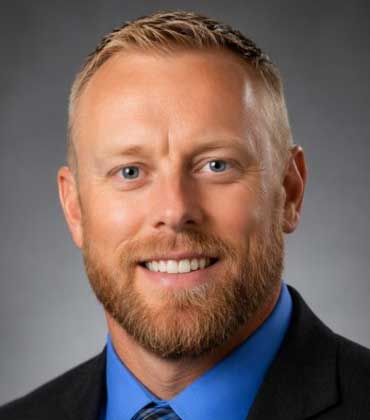
Nathan Westendorp
Shaping More Effective Regional Planning
As one of the largest municipalities in southern Ontario, and one that continues to experience significant growth, Simcoe County needs planning now more than ever. Planning includes development approvals. Planning also needs to have its sights on approving the next project. However, it doesn’t stop there. Planning is also about preparing for the needs of the future.
In today's housing and economic environment, it is important to get growth built in the right way, in the right place and at the right time. However, effective planning also means looking beyond today's needs and preparing for tomorrow's opportunities and challenges. It means understanding the infrastructure, mobility and natural systems that support growth and ensuring they are ready for the future.
Recent legislative changes are reshaping the County of Simcoe's role in planning. We will be less involved in local planning matters that can be effectively managed by our municipal partners. At the same time, these changes present an opportunity for the County to evolve and focus more strategically on regional priorities.
With County Council's support, our role will increasingly focus on ensuring the systems that support future growth are in place and functioning effectively. Growth succeeds when the systems that support it are planned before the growth arrives. Our future role is less about approving individual developments and more about helping communities build a sustainable and resilient future.
Balancing Growth with Sustainable Land Use
One of the biggest challenges in planning is creating certainty in a world that is changing quickly. Growth often requires change, and that change is frequently most visible in and around established communities. While change can create opportunity, uncertainty can create concern.
Often, people are less concerned about change than they are about uncertainty. Residents want to understand how their communities are evolving. Developers want predictable approval processes. Municipalities need confidence that infrastructure can support future growth.
Everyone involved in the process benefits from a clear understanding of where growth should occur, where it should not occur, what information is required to assess proposals and what infrastructure is needed to support development.
Good planning provides that certainty through a framework of clearly written documents and efficient processes. Ultimately, balancing growth and sustainability means creating a framework that supports investment, protects important community and environmental assets and gives residents confidence that growth is being managed responsibly.
Building Trust through Community Consultation
While community consultation typically occurs at the local municipal level, meaningful engagement remains one of the foundations of good planning. Residents bring valuable local knowledge, perspectives and experience that can strengthen planning decisions and improve outcomes.
Effective consultation helps people understand not only what is changing, but why. It also provides planners and decision-makers with insights that might not otherwise emerge through technical studies alone.
The most successful planning processes are those that engage communities early, communicate clearly and create opportunities for meaningful participation. The best planning decisions are informed by both technical expertise and community insight. Even when consensus is not possible, people deserve to understand how decisions are made and the considerations that shaped them. Building that understanding helps strengthen trust in the planning process.
Integrating Transportation with Future Growth
Transportation and land use planning need to happen together. Communities are most successful when housing, employment, services, recreation and transportation networks are planned as a single integrated system.
Effective planning means looking beyond today's needs and preparing for tomorrow's opportunities and challenges.
Transportation and land use planning are two sides of the same coin. Decisions about where growth occurs directly influence how people move throughout a community and the infrastructure required to support that movement.
Municipalities can strengthen this integration by investing in transportation modeling and scenario testing. These tools help evaluate how different growth patterns will affect congestion, transit performance, infrastructure costs and community livability before decisions are made.
Transit-oriented development can support more efficient infrastructure investment, create more transportation choices and contribute to complete communities where residents can more easily access jobs, services and amenities. If we plan growth without transportation, we're planning tomorrow's congestion. By considering land use and transportation together, municipalities can build communities that are more connected, sustainable and resilient over the long term.
Advice for Emerging Planners
The world has changed significantly over the years, and it will continue to change. My advice is simple: never stop exploring new ideas and perspectives. Continue investing in your knowledge, broadening your experiences and developing the skills needed to adapt as the profession evolves.
Planning is fundamentally about shaping a vision for the future, but planners do not build communities on their own. It takes elected officials, developers, builders, engineers, community organizations and residents working together to turn ideas into reality. For that reason, it is important to understand not only planning theory and policy, but also how projects are delivered and what others need to succeed – especially the financial inputs needed to make development a reality.
The most effective planners combine technical expertise with collaboration, curiosity and practical problem-solving. Planning is where vision meets implementation. Great planners don't just understand plans. They understand what it takes to turn plans into reality. After all, a vision that is achievable is a plan. Otherwise, it is just a dream.
The articles from these contributors are based on their personal expertise and viewpoints, and do not necessarily reflect the opinions of their employers or affiliated organizations.
