

Thank you for Subscribing to Real Estate Business Review Weekly Brief

Ltd.
Cheng Kin Joe, Director, Engineering – Civil and Structural, Binnies Singapore Pte.
Nature-Based Solutions: The Next Step in Sustainable Urban Stormwater Management
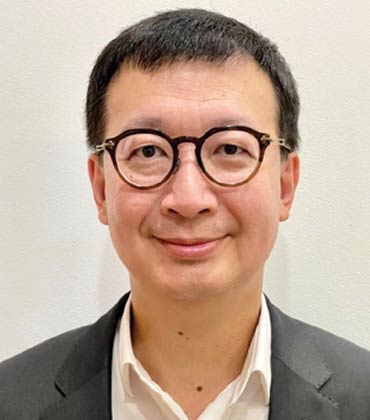
Cheng Kin Joe
While climate change is a global phenomenon, Southeast Asia is one of the region’s most badly affected by its impacts. This is evident in Singapore, where rainfall trends in the last 30 years indicate increasing intensities and frequencies of severe storms.
Rapid urbanisation has resulted in reduced ground absorption and increased runoff discharged directly to the public drainage system. The situation is worsened by intense storms, which are increasingly overwhelming existing infrastructure. Severe weather events have become so frequent that flooding has risen to the top of climate change concerns for people in Southeast Asia.
Existing Measures to Mitigate Flooding
In developed cities in the region, there are existing measures to retain stormwater runoff at the source to delay its release into the public drainage network during peak rainfall periods. These measures include increasing the capacity by widening and deepening drains and canals, incorporating on-site detention in new developments, creating diversion canals, performing regular drain maintenance and rehabilitation and discharging stormwater to the sea during high tide using stormwater pumps, for example, at Marina Barrage in Singapore. In addition, Singapore employs pluvial hydrodynamic modelling for flood risk analysis and to identify flood-prone areas and drainage systems that require upgrading to meet the Code of Practice on Surface Water Drainage.
While these current measures are effective for planning and operation, there are limitations – these solutions are more suitable for and applicable to newer and larger-scale developments. Retrofitting existing and smaller real estate developments is challenging and often impossible as these urban areas may be highly dense. Upgrading and maintaining drainage systems is also a land-intensive exercise and public space for drainage often competes with other development needs, spelling more challenges for land-scarce cities and countries like Singapore.
The Way Forward: Sustainable Urban Stormwater Management
However, urbanisation does not spell all gloom and doom, and these trends in stormwater management demonstrate how sustainable urban development can create positive impacts beyond the environment.
New real estate developments across the region are seeing the integration of stormwater management, landscaping, non-potable water use and recreational features within the development plans. Some examples include bioretention swales, vertical greenery, roof gardens, rainwater harvesting, stormwater collection ponds and cleansing biotopes, among others.
In SEA, more and more public and private real estate developments are integrating aesthetically pleasing features to enhance infrastructure that supports existing stormwater management solutions. These enhancements add value to the infrastructure and development while encouraging the community to enjoy the features through various recreational activities. One example is the ABC Waters at Jurong Lake, completed by Binnies Singapore in 2010. Under this project, Jurong Lake (an existing stormwater management system) has been transformed into an attractive venue for the community. Key features of this project were the installation of a 235-metre boardwalk and fishing deck skirting the water edge, as well as man-made floating wetlands along the southern promenade that allow the public to enjoy and appreciate the flora and fauna. An outdoor viewing and performance stage offers a space for community events to take place adjacent to the lake and is complemented by a dramatic 20-metre-tall fountain. Other features include dedicated lanes for competitive dragon boating and kayaking events, sport fishing zones and the installation of a shelter along the northern promenade.
"As we progressively move towards the future, an approach incorporating nature-based solutions to mimic nature and effectively slow down or retain the peak flow of runoff at the source can help cities become more resilient and future-proof"
As we progressively move towards the future, an approach incorporating nature-based solutions (NbS) to mimic nature and effectively slow down or retain the peak flow of runoff at the source can help cities become more resilient and future-proof. Here lies the opportunity for the real estate industry to play a more active role by designing and upgrading developments that partner with nature to enhance value for the environment, the real estate and the community.
The power of NbS lies in its potential for multifunctionality and regenerative design; implementing NbS, the initiatives inherently incorporate natural systems into design, maintenance, development and infrastructure policies and plans. The use of porous pavements, green roofs, swales, rain gardens and constructed wetlands, among others, act as natural sponges that can trap and slowly release water, enabling a more manageable distribution of heavy flow over urban surfaces into drainage systems, paving the way for optimal sizing of downstream drains and canals.
For example, vegetated swales, natural drainage channels with a mild slope, offer a higher area roughness and lower surface gradient to enable the conveyance of stormwater overland at a slower speed compared to concrete-lined drains. Meanwhile, the inherent design of rain gardens and vegetated land depressions can detain and treat stormwater runoff by filtering it through densely planted surface vegetation and then percolating it through prescribed filter media (soil layers). Constructed wetland systems (shallow and extensively vegetated water bodies) enable runoff to flow slowly through heavily vegetated areas, retaining water at the source for longer and channelling it for use at a later stage or until it is ready to be released to the public drainage system.
Towards a Sustainable Future
NbS go beyond stormwater management to deliver wide-reaching and positive environmental, social and economic outcomes and gains. Filtering and cleansing water naturally without using chemicals enables possible rainwater harvesting and the reuse of collected water for non-potable applications such as irrigation and washing while encouraging habitat creation and promoting biodiversity. The reduced construction of concrete drains also helps contribute towards a lower carbon footprint.
The articles from these contributors are based on their personal expertise and viewpoints, and do not necessarily reflect the opinions of their employers or affiliated organizations.
