
Thank you for Subscribing to Real Estate Business Review Weekly Brief

Director of Urban Regeneration Direction of Milan City Council
Simona Collarini, Architect and Planner, PhD in Territorial and Environmental Planning
Shaping Milan's Future: Smart Cities, Urban Regeneration, and Sustainable Development
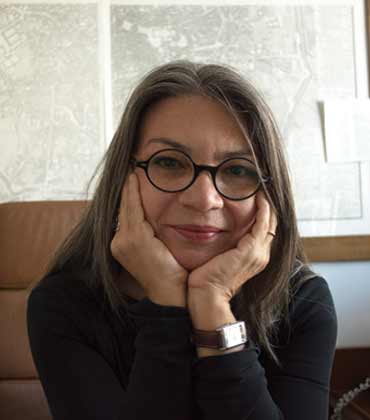
Simona Collarini
Collarini’s Expertise
I graduated with a degree in Architecture from the Politecnico di Milano, specializing in urban planning. I also hold a PhD in Territorial and Environmental Planning from La Sapienza University in Rome.
After graduating, I began working in the Department of Territorial Sciences at the Politecnico di Milano. Over eight years, I supported teaching, conducted research across various areas of the discipline, collaborated on external projects, and worked in different regions of Italy. This period was intense, rich, complex, and inspiring.
My engagement in research allowed me to explore various aspects of the field, build a network of connections, develop ideas, and write articles and books. Working with students enhanced my skills in managing relationships, navigating complex activities, and focusing on achieving results. The hands-on experiences I gained helped me apply theoretical knowledge to real-world situations.
Another significant experience was in public administration, where I started as a technician and gradually advanced to high management. This diverse background has allowed me to expand my range of activities and broaden my network of contacts. My career growth has equipped me to integrate theories with practical tools effectively.
Leading the Way in the Concept of 'Smart Cities’
The concept of a "smart city" is broad. In Milan, we can identify several key issues: innovation and urban economy, mobility, security and cybersecurity, and the use of territorial data. In 2014, the Municipal Council approved the "Guidelines for Milano Smart City."
According to these guidelines, a smart city should not only enhance its technological capabilities but also promote economic development and social inclusion, innovation, training, research, and public participation.
The document is organized into seven main points:
1. Global city, national and European laboratory
2. Sustainable urban mobility workshop
3. Environmental and energy policy laboratory
4. Social inclusion and diversity workshop
5. Wellness workshop in the city
6. Simplification workshop for public administration
7. Enterprise Generation Workshop
Recent important projects include the establishment of the Smart City Lab, an incubator aimed at boosting innovation among enterprises, and the development of a digital twin of the city.
By adopting an integrated approach, some of these projects have been aligned with urban planning and overall urban regeneration processes.
Overseeing City Operations and Managing the City’s Budget
The administrative and technical organization of the Municipality of Milan is quite complex. From my perspective, I have a broad understanding of this structure, as urban regeneration involves many components. My specific unit, one of the largest in the municipality, plays a crucial role in generating economic resources from various building fees.
These financial resources fund a significant portion of the public works program. Additionally, they are used directly by private developers to undertake public works related to specific urban private projects.
When discussing historical preservation, it is essential to recognize that the historical urban fabric—beyond just monuments and heritage sites—plays a significant role in preserving our identity.
Balancing the City's Historical Preservation
The relationship between conservation, regeneration, and transformation is perhaps the most crucial factor for the future of cities. This issue extends beyond urban morphologies and design; it represents the connection between the past, present, and future within a critical context shaped by social and environmental challenges.
When discussing historical preservation, it is essential to recognize that the historical urban fabric—beyond just monuments and heritage sites—plays a significant role in preserving our identity. At the same time, we must enhance the quality of these structures to meet contemporary environmental standards.
In our overall urban plan, we aim to achieve this challenging balance by implementing both incentives and mandatory regulations.
Designing Green Spaces that Meet Environmental Standards
We are currently developing the new urban general plan, the third since 2012. This challenging project aims to match three main needs: tackling environmental issues related to urban microclimates, creating a new model of urban growth to reduce urban inequalities, and enhancing local relationships within a proximity city framework.
Our strategies, objectives, measures, and tools are all focused on achieving this goal. A key innovative tool in this plan will be the "Neighborhoods Atlas," which operates at an intermediate urban scale, bridging metropolitan dimensions, global urban perspectives, and local contexts.
The "Neighborhoods Atlas" will emphasize a new vision of a polycentric urban structure, the design of public spaces, and green connections—all integral to the regeneration process and a revamped set of urban and building regulations.
Fostering Community Engagement
In Italy, several phases of the urban planning process involve citizen engagement, as outlined by urbanistic laws.
Firstly, during the preparation of the urban general plan, the Strategic Environmental Assessment facilitates the involvement of citizens as well as various stakeholders, including environmental and social organizations. After the plan is adopted, responses to citizen contributions are reviewed and approved directly by the City Council. Additionally, local municipalities provide different opportunities for public involvement in the process.
This engagement is practiced not only for the general strategic plan but also for private urban design projects.
Advice to the Young Aspirants
There is a precondition: my work requires passion. It is not simple, as we directly contribute to improving (or sometimes diminishing) the quality of life in our communities. Therefore, the foundation of our work must be well-rounded, incorporating more than just technical skills. Various experiences are essential to this process.
The articles from these contributors are based on their personal expertise and viewpoints, and do not necessarily reflect the opinions of their employers or affiliated organizations.
