
Thank you for Subscribing to Real Estate Business Review Weekly Brief

Bergen municipality
Tarje I. Wanvik, Director of Plan and Building Agency
Sustainability Lost? On the Shifting Role of Sustainability and Planning in Urban Development and Local Politics
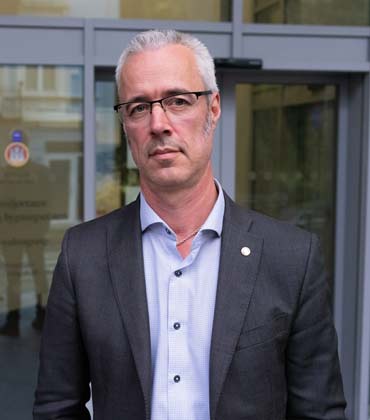
Tarje I. Wanvik
In the last 25 years, two major developments have occurred simultaneously regarding the perceived role of sustainable urban planning: 1) a silencing of the public sustainability discourse and 2) a new interpretation of the role of the professional public planner. These developments have left both the notion of “sustainability” and “planning” in dire straits, and urban planners are struggling to retain their importance and critical role as change agents for a better future.
The public urban planner can be perceived (positively) as a facilitator of constructive, sustainable, transparent and responsible planning processes or (negatively) as an oppressor of citizens or companies’ freedom and rights to property, privacy or profits. Two major developments explain why the perception of the planner has shifted from positive to negative during the last 25 years. We must understand this to do something about it.
A Changing Sustainability Discourse
The public debate will provide varying degrees of support for different professional voices and opinions in an urban community. Over the past 25 years, we have experienced a public sustainability discourse that has supported public investments in strong professional sustainable planning competence. One might say that the sustainability discourse has fostered a strong line of committed public planning expertise in sustainability objectives and tools.
However, lately, the broad-lined public sustainability discourse has, in many ways, been silenced as urban communities are facing economic challenges of welfare services, increased polarisation of public opinion and the rising threat of war and conflict. In addition, sustainability has proven to be troublesome and complex, often limiting the freedom of citizens and companies and, hence, not very popular. This has resulted in a deepening divide between the professional and political levels in cities all around the world.
A Changing Relationship
The changed sustainability discourse coincides with a changing relationship between the political and administrative levels of local politics. The modern urban planning bureaucracy was established to deal with detailed management by delegating authority from elected bodies. The motivation was to ensure transparency and equal treatment of all citizens and to free the elected officials from the nitty-gritty of detailed managerial tasks, leaving the politicians to deal with oversight, forecasting and master plans based on political programs.
Only by understanding and respecting our different roles, competencies and responsibilities will we be able to act on a shared vision for our common future
However, such delegation of management tends to come with challenges of trust and loyalty. In the 1980s, we saw the surge of so-called new public management, where delegation was replaced by control and reporting. This, in turn, led to an increased professionalisation of the planning bureaucracy. This development peaked in the early 2000s, with the subsequent complexity and professionalism of sustainable urban planning.
The Castaway Child
Today, 25 years later, the situation has developed into the completely opposite of the intensions once guiding the relationship between the elected bodies and its planning bureaucracy.
Now, the role of the professional bureaucracy is to develop and manage overarching rules and regulations, guidelines, societal forecasting and master planning. At the same time, the elected officials perceive themselves more like ombudsmen, preoccupied with detailed and personalised effects of the rule of law, representing the common citizen against the professional planning bureaucracy.
Hence, it has become the story of the castaway child: the professional bureaucracy, born out of the elected body’s need for time to perform strategic management and development, is now perceived as a thorn in the side of common sense, pragmatic facilitation of citizens’ rights and freedoms against the rigid professionalism of the bureaucracy.
A Braver New World
The complexity of urban planning requires us to work better together as cities and citizens. The complexity of sustainability requires professional competence and knowledge, and political courage and decisiveness. Elected officials and professional planners need to get closer to each other and collaborate for a more sustainable future. Only by understanding and respecting our different roles, competencies and responsibilities will we be able to act on a shared vision for our common future.
The articles from these contributors are based on their personal expertise and viewpoints, and do not necessarily reflect the opinions of their employers or affiliated organizations.
