
Thank you for Subscribing to Real Estate Business Review Weekly Brief

Seldin Company
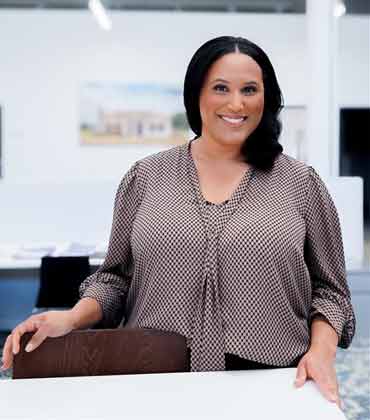
Rebecca Lyn Busse, Vice President of Marketing
Where Smart Tools Meet Human Intelligence
Rebecca Lyn Busse
Rebecca Lyn Busse brings a strong foundation in marketing to her role as Vice President of Marketing at Seldin Company. Her career began outside of real estate, with roles at Mutual of Omaha, the Knot Wedding Network, and various tech startups, where she developed a solid understanding of brand strategy and digital engagement. In 2017, she transitioned into the property management and real estate space, overseeing marketing operations as Director of Marketing at her previous firm. There, she focused on lead and lease attribution, building a strong connection between marketing performance and measurable ROI. Guided by a mentor in revenue management, she developed a deep appreciation for cost-per-lead and cost-perlease metrics. At Seldin Company, she continues that results-driven approach—most notably by implementing the company’s first CRM system to enhance data tracking and optimize return on investment.
Connecting the Dots in PropTech Integration
"One of the biggest challenges I see in the industry today is managing the complexity of integrating multiple PropTech tools across a tech stack. We often work with a range of products—CRMs, advertising platforms, and resident-facing technologies—that may not be built to communicate seamlessly with one another. Finding ways to connect these tools so they work in harmony takes both strategy and creativity. It’s not always a straightforward process, and it can feel like solving a puzzle.
At Seldin Company, we’re very intentional about approaching these integrations. We focus on creating systems that function cohesively and empower our onsite teams. I believe it’s critical that the people using these tools every day feel confident and well-trained. When teams are comfortable with the technology, they’re more likely to use it effectively, which ultimately drives better outcomes for both residents and the business."
Modern Tools, Timeless Standards
We take a thoughtful and deliberate approach when integrating AI and automation into our marketing strategy. We engage in deep, detailed conversations with any vendor we consider partnering with to ensure their tools align with our values and priorities. One of the most important factors we evaluate is whether the technology is built on a strong foundation of Fair Housing and ADA compliance. That’s non-negotiable for us. It’s not just about innovation—it’s about responsibility.
“I believe it’s critical that the people using these tools every day feel confident and well-trained. When teams are comfortable with the technology, they’re more likely to use it effectively, which ultimately drives better outcomes for both residents and the business”
We want to ensure that any AI tools we implement are practical, ethically sound, and legally aligned. Fortunately, we’ve partnered with vendors who share that mindset and make compliance a core focus in product development. For us at Seldin Company, our technology choices must reflect our mission to uphold accessibility, equity, and integrity—while pushing the boundaries of what modern marketing can achieve.
Technology Is Only as Good as Its Users
One of our major recent initiatives at Seldin Company involves integrating AI-driven tools into our website and communication systems to enhance both performance and user experience. While I can’t name specific vendors, we’ve implemented smart bots that help guide prospects through our website, offering information on available apartments and capturing key behavioral data. That data has become invaluable in helping us understand what our audience is most interested in and how we can better meet their needs.
Another area we’ve leaned into is AI-powered phone systems. These tools go far beyond providing office hours or taking emergency maintenance requests. They now answer detailed questions about amenities, availability, and other topics that often arise during off-hours. This type of automation has helped us maintain a high level of responsiveness and service—even when our teams aren’t physically present—which ultimately strengthens our leasing pipeline and enhances the resident experience.
Building With Compliance in Mind
I believe AI is still in its early stages, but it’s evolving quickly and will soon become integrated into nearly every product and process within real estate marketing. As it continues to mature, its role will extend far beyond automation and efficiency. One area I’ve been exploring personally is the emotional and tonal side of AI—how it communicates, the emotional intelligence it can convey, and its potential to create a more human-like, companion-style connection. That’s going to be a game-changer.
Whether it’s nurturing leads or engaging current residents, the ability of AI to respond in a way that feels personal and emotionally aware will be key to building stronger relationships and improving retention. In the future, I see PropTech and AI working together not just as tools, but as true extensions of the brand voice—helping us create more meaningful and responsive marketing experiences.
Stay Curious, Stay Proactive
My most significant piece of advice for marketers in real estate or property management is to stay curious and always be researching. The PropTech space moves fast, and often the most valuable innovations come from tools or platforms that weren’t originally built for our industry. If you come across a promising technology—even if it’s outside your immediate field—ask your vendors about it.
Many are still in that agile, startup mindset and are open to feedback or feature suggestions. You might discover they already have something similar in development or on their roadmap. In some cases, you could even join a beta test for a feature that hasn’t launched yet. That kind of access not only keeps your strategy ahead of the curve but also helps you build stronger relationships with your tech partners.
Ultimately, staying engaged with emerging technology helps you create better experiences for both prospects and residents.
The articles from these contributors are based on their personal expertise and viewpoints, and do not necessarily reflect the opinions of their employers or affiliated organizations.
