

Thank you for Subscribing to Real Estate Business Review Weekly Brief

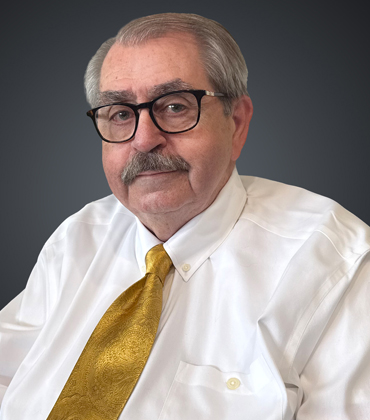 Ron Akin, Owner
Multifamily property owners rarely share the same objectives. Some prioritize yield, others long-term value, and many operate within financing structures that impose strict compliance requirements. When management models rely on fixed processes, execution drifts from the original investment intent. SunRidge Management Group was built around that gap.
As a third-party management company, it operates within defined responsibilities. It does not compete with its clients or invest alongside them. Its role is to manage assets entirely on their behalf, with the expectation that operations reflect the specific goals tied to each property. That distinction shapes every decision across the portfolio.
“Our clients’ goals define how we operate. Everything we do is built around that,” says Ron Akin, owner.
Headquartered in Dallas and operating for 36 years, SunRidge works with a client base that spans banks, real estate investment trusts, and single-asset family owners. The portfolio covers approximately 25,000 units across conventional, affordable, and specialty-designated communities, with a focus on assets of 100 units or more.
To support that level of alignment, SunRidge keeps critical functions in-house. Accounting, IT, marketing, reputation management, and compliance oversight are all handled from the corporate office in Dallas. When a property's website goes down or a payment system fails, the corporate team responds directly. Technology support is treated as operational infrastructure, not a profit center, making it a cost-efficient resource for clients.
The engagement follows an asset through its full lifecycle. Before a property changes hands, SunRidge supports due diligence through unit walks, file audits, budget and pro forma development, and direct feedback on whether projected rents are achievable. The company emphasizes transparency in evaluating deal viability and expected performance.
-
Our clients’ goals define how we operate. Everything we do is built around that.
Once a takeover is underway, a Vice President of Construction supports value-add work, ensuring bid comparisons are structured correctly, vendor insurance is verified, and contracted scope is completed as written. During ongoing operations, a roving maintenance and management support team provides coverage in markets where consistent on-site staffing remains a challenge, particularly following COVID-related disruptions. The in-office accounting team, led by staff accountants and a controller, maintains close oversight of expenses and helps prevent overbilling at both the asset and resident level.
For HUD-backed properties, SunRidge maintains certification and employs a dedicated specialist who manages required reporting and auditing. This ensures compliance while allowing clients to remain removed from the process. A separate affordable housing and compliance department supports tax credit designations, senior housing classifications, and other reporting requirements. Training operates on two tracks. An online platform supports continuing education, and a corporate training director works directly with site teams to maintain consistent standards. Together, these functions free clients from operational detail, preserving their focus on the goals tied to each asset.
Flexibility is not a feature of the model. It is how the model operates. SunRidge adjusts its approach based on the goals associated with each asset, whether that involves repositioning a property, adapting leasing strategies, or aligning operational priorities with investment timelines. That often means adjusting processes instead of applying a fixed playbook. The structure exists to support that adaptability.
The impact of that approach is most visible over time. About eight years ago, a developer approached SunRidge as a first-time participant in HUD-backed development with a single property. The company helped establish the operational and compliance framework required for successful delivery and lease-up. Over the following eight years, that client developed more than 15 communities, expanded into new and tertiary markets, and built the capacity to pursue joint ventures and land partnerships. That progression reflects what long-term alignment between ownership and management can produce, earning SunRidge recognition as the Top Multifamily Real Estate Management Services Provider.
SunRidge is growing deliberately, at a pace that preserves its operating model. Investment is focused on expanding operational teams and integrating emerging technologies, including AI tools, to improve efficiency while maintaining the human interaction that residents and clients expect. Thirty-six years into its operations, the company continues to answer the phone. For many owners, that level of accessibility remains a difference they notice.
Choosing Precision in Multifamily Real Estate Management
Multifamily portfolios rarely fail from a lack of demand; they underperform when execution across finance, compliance and resident experience begins to fragment. Owners today face a persistent tension between scaling portfolios and maintaining tight control over asset-level performance. Dispersed accounting functions, inconsistent reporting standards and reactive site operations often erode visibility, leaving executives exposed to cost leakage and delayed corrective action. In this environment, management partners are judged less on breadth of services and more on how consistently they translate ownership intent into daily operational discipline.
Financial control remains the most immediate pressure point. Many management structures rely on distributed or outsourced accounting models that create lag between on-site activity and financial oversight. This disconnect complicates expense tracking, weakens forecasting accuracy and introduces avoidable surprises during audits or refinancing cycles. Strong management firms counter this by centralizing financial functions, ensuring that accounting, budgeting and performance tracking remain closely aligned with ownership expectations. The ability to maintain a continuous, real-time understanding of expenses and revenue trajectories has become a defining differentiator.
Portfolio diversity introduces another layer of complexity that few operators navigate effectively. Owners increasingly hold a mix of asset classes, financing structures and regulatory obligations, from conventional properties to HUD-backed or compliance-driven housing. Managing these assets requires more than standardized playbooks; it demands specialized knowledge of reporting frameworks, audit requirements and regulatory nuance. Firms that can integrate compliance oversight directly into their operating model reduce risk while allowing owners to pursue varied investment strategies without operational friction.
Flexibility at the execution level has also emerged as a decisive factor. Rigid management structures often struggle to adapt to the specific goals of different ownership groups, particularly when strategies shift between stabilization, value-add or development phases. Effective partners distinguish themselves by aligning site-level operations with the precise objectives of each asset, whether that involves adjusting leasing strategies, refining expense controls or supporting repositioning efforts. This adaptability ensures that operational decisions remain tethered to financial outcomes rather than internal process constraints.
Technology and support infrastructure further separate the capable managers from average ones. Site teams today carry an expanding workload, from resident engagement to compliance tracking and marketing execution. When critical functions such as IT support, digital infrastructure or reputation management are fragmented or outsourced, the response times slow and consistency declines. Firms that consolidate these capabilities within a central structure reduce downtime, maintain brand integrity and allow on-site teams to focus on resident-facing priorities. The result is a more stable operating environment that supports both occupancy and long-term asset value.
SunRidge Management Group aligns closely with these expectations through a model supported by centralized, in-house operations and client-specific execution. It maintains all accounting functions within its corporate office, enabling tighter expense oversight and closer financial monitoring. Its in-house capabilities extend across IT, marketing, compliance, and training, allowing the company to maintain consistent standards across properties. Its HUD certification, supported by dedicated internal resources, enables it to manage complex financing structures while handling required reporting and compliance directly. Most notably, it approaches each engagement with a flexible framework, adapting operations to match the owner’s defined objectives rather than enforcing a fixed methodology.
...Read more
