

Thank you for Subscribing to Real Estate Business Review Weekly Brief


 Colin Foster, Founder & Chief Innovation Officer
Across the city’s skyline—tucked behind the polished facades of cooperatives, sleek condominiums, apartment buildings, and even private residences in quiet suburbs—a quiet revolution in residential living is underway.
You won’t always see it. There’s no uniformed greeter at the door, no front-desk clipboard. But behind every secure delivery, every buzzed-in guest, and every after-hours access request, there’s a system at work.
At the center of this shift is Virtual Doorman, a 21st-century solution redefining security and service for properties that want the perks of a full-time staff without the staggering costs. For more than two decades, Virtual Doorman has been transforming how buildings of all types—co-ops, condos, rentals, and single-family homes—manage access, protect residents, and deliver round-the-clock peace of mind.
When we first started, people didn’t really understand what a Virtual Doorman could do. Now, it’s becoming the standard. But what makes us different is that we never stopped thinking like problem-solvers
“Our mission is to build upon our position as the originator and market leader in the remote/electronic doorman industry and always provide revolutionary and technologically advanced solutions to our customers,” says Colin Foster, founder and chief innovation officer of Virtual Doorman.
For Foster, a real estate veteran with an eye for opportunity and a deep understanding of the operational pain points faced by building owners, Virtual Doorman began as a practical solution to a growing problem.
“It started with a simple question,” Foster recalls. “How do you deliver all the essential services of a doorman— security, delivery handling, guest access—for buildings that can’t afford a full-time staff?”
That question sparked the beginning of a company that now supports thousands of residential buildings across the U.S., using smart technology, real-time human operators, and a growing suite of AI-powered tools to manage access, improve safety, and streamline the lives of residents.
The Cost of Tradition
 To understand the value Virtual Doorman provides, you first need to understand the steep realities of traditional staffing. A 24/7 doorman presence isn’t just about hiring one employee—it’s five to six full-time salaries, benefits, scheduling logistics, and often, union contracts. In most major cities, it adds up to hundreds of thousands of dollars per year.
“People are often shocked by the math,” says Matthew Barnes, executive vice president and the next-generation leader driving Virtual Doorman’s future. “Most buildings simply can’t sustain that cost. And even those that can—they’re starting to ask, ‘Why should we?’”
Virtual Doorman offers a different answer. From its Jacksonville-based operations center, trained operators monitor buildings across the country in real time. With building-mounted cameras, two-way audio, and access control systems, they can buzz in residents, grant access to delivery personnel, verify visitors, and more. It’s everything a traditional doorman does—just from hundreds of miles away.
And because each operator can manage multiple properties at once, the cost savings are dramatic—up to 80 percent lower than conventional staffing. But savings alone aren’t the whole story.
-
Our mission is to build upon our position as the originator and market leader in the remote/electronic doorman industry and always provide revolutionary and technologically advanced solutions to our customers
Security, Reinvented
If the beating heart of Virtual Doorman is its human operators, its backbone is the robust, ever-evolving technology that powers them. Over the last 15 years, the company’s proprietary app has become one of its most valued features.
Residents use the app to manage access for guests and vendors, receive alerts, view logs, and even unlock doors remotely. One standout feature, See Something, Say Something, lets residents snap a photo of suspicious activity and instantly send it to both Virtual Doorman and their building manager.
“It turns every resident into an extra set of eyes,” Barnes explains. “It’s not just reactive—it’s proactive. And that makes a big difference.”
For building managers, the technology goes even deeper. A newly launched client dashboard gives them a live window into the building’s activity—from deliveries and access logs to system health and response reports. Soon, new AI integrations will allow managers to control more features remotely: turning on lights, activating sirens, or even speaking through audio speakers if needed.
But perhaps the most revolutionary feature is the guest management system. Unlike many competitors that require residents to generate one-time codes for visitors, Virtual Doorman offers a more intelligent approach.
“If you have a dog walker who comes every Monday, Wednesday, and Friday between 11 and 1,” Foster says, “you can give them recurring access, limited to those hours, and monitor their comings and goings. It’s automated, secure, and hands-off.”
It’s also deeply customizable. Each building receives a tailored system based on its architecture and needs. Whether it's installing license plate readers for garage access or designing basement-level package rooms in prewar buildings, the solution is never one-size-fits-all.
A Real-World Transformation
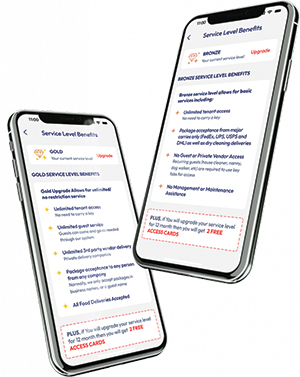 A recent project in downtown Brooklyn illustrates just how transformative this technology can be.
When real estate developer Alex Rivera purchased a modest mid-rise apartment building in downtown Brooklyn, he didn’t just see exposed brick and vintage charm—he saw potential. The property, while beloved by longtime tenants, was weighed down by outdated infrastructure: an old-school intercom system, a front desk staffed around the clock, and a traditional doorman whose presence often felt more performative than practical.
Alex envisioned something different. He wanted a building that merged modern technology with a sense of security, style, and independence—a residence that would appeal to the next generation of urban dwellers who value both privacy and peace of mind. But he also wanted to eliminate the inefficiencies and high costs associated with legacy systems.
Working closely with Virtual Doorman, Alex introduced a full suite of smart building solutions—including Virtual Doorman and Virtual Guard systems. These technologies delivered an immediate impact as residents could now unlock doors, admit guests, and manage deliveries remotely via their phones. Instead of relying on a single doorman, the building was protected round-the-clock by remote security professionals trained to handle any situation in real time.
Advanced facial recognition systems tracked visitor entries without breaching residents’ privacy—enhancing safety without the feeling of being surveilled. This also enabled seamless delivery management, as packages were received, logged, and stored efficiently, eliminating the frustration of missed or lost deliveries.
The results were immediate. Residents praised the newfound autonomy and security. Without the constant presence of a traditional doorman, tenants felt less like they were living in someone else’s building and more like they were in control of their own space. The building quickly gained a reputation as a tech-savvy, luxury residence.
One resident summed it up perfectly:
"It feels like living in the future—everything just works, and I finally feel safe without sacrificing my privacy.”
Alex’s decision to collaborate with Virtual Doorman paid off. Operational costs dropped by over 40 percent as the need for full-time staff diminished. At the same time, tenant satisfaction soared. Lease renewals jumped by 20 percent, and the building developed a waiting list for new units—a rarity in an already competitive Brooklyn rental market.
From Surveillance to Insight
As more buildings adopt smart access systems, the conversation has shifted from mere surveillance to insight—and Virtual Doorman is leading that charge. Its systems don’t just watch; they learn. By integrating AI video analytics, they can differentiate between people, animals, or vehicles, reducing false alarms by over 70 percent.
Barnes sees AI as more than a tech upgrade—it’s an operational necessity.
“A person can’t watch a screen for hours and maintain focus,” he says. “AI doesn’t blink.”
This same technology also helps detect illegal sublets—such as unauthorized Airbnb listings or fraudulent leases in rent-controlled buildings. The platform flags unusual patterns of access and can alert building management discreetly, helping maintain legal compliance and protect building integrity.
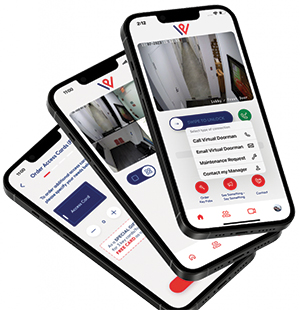 Virtual Doorman’s future isn’t just about smarter software—it’s about smarter cities. The company is developing API integrations that will allow building systems to speak with one another across portfolios, enabling portfolio-wide visibility and control.
It is also testing new features that allow building managers to share control of certain security tools with trusted residents or board members. It’s a small but significant step in decentralizing building operations while enhancing responsiveness.
And at the center of it all remains a simple goal: peace of mind.
“When we first started, people didn’t really understand what a Virtual Doorman could do,” Foster says. “Now, it’s becoming the standard. But what makes us different is that we never stopped thinking like problem-solvers.”
For the residents of Virtual Doorman buildings, that means living in places where security feels personal, where convenience doesn’t sacrifice privacy, and where the doorman may be virtual—but the care is very real.
