

Thank you for Subscribing to Real Estate Business Review Weekly Brief


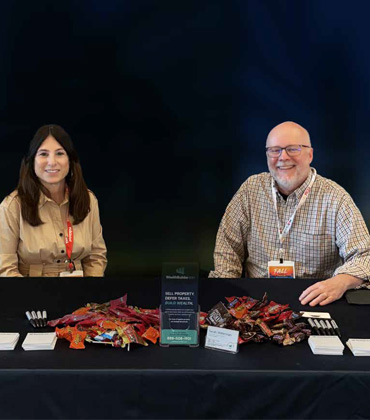 Chris Peterson, President
In 2008, as the commercial mortgage banking crisis dominated headlines, another major event shook the 1031 exchange industry: the bankruptcy of LandAmerica 1031 Exchange Services, then one of the country’s largest qualified intermediaries.
At the time, Chris Peterson was practicing law, and some of his clients used LandAmerica as their qualified intermediary. One of them had $16.5 million with the company for the purchase of an apartment complex. The closing documents were signed. The next day, however, the title company called Peterson. The funds had not arrived. Attempts to reach LandAmerica failed. Soon, news broke that the company had filed for bankruptcy, leaving the $16.5 million—and other clients’ funds—tied up.
The deal had to be unwound. Peterson’s law office helped affected clients hire bankruptcy counsel and file with the bankruptcy court to try to recover their money. Some recovered everything, some partially, and others nothing. The disruption also caused clients to miss their 1031 exchange deadlines.
That experience prompted a group of real estate investors represented by Peterson’s law office to ask him to create a qualified intermediary they could trust. He spent the next year researching what it would take to build one.
 “In 2009, I launched Brazos 1031 Exchange Company, later rebranded as WealthBuilder 1031 in 2022,” says Peterson. “The experience made the security of clients’ exchange funds a foundational priority for Wealthbuilder 1031.”
Today, the company works with investors nationwide across deferred, simultaneous, improvement and reverse exchanges. Its approach combines education, accessibility and a hands-on process designed to simplify the administrative side of each transaction.
An Investor’s Toolbox
Real estate transactions rarely follow a single pattern. An investor may sell a property before finding the next one, discover an additional capital into a replacement property. WealthBuilder 1031 facilitates four exchange structures to accommodate those situations.
The most common is the deferred exchange. An investor sells a property, identifies potential replacement properties within 45 days, and then uses the proceeds to acquire one or more replacement properties within the applicable 180-day period. In a simultaneous exchange, the sale and purchase happen at the same time, a structure Peterson most often sees when two investors agree to swap properties.
Our goal is to take all of that legal complexity and put the cookies on the bottom shelf, so investors understand what they need to know, what the deadlines are, and what we need from them.
An improvement exchange allows an investor to use exchange funds not only to acquire a replacement property but also to make capital improvements to it. Those improvements can range from new carpet and paint to a complete remodel or new construction. An investor could even purchase undeveloped land and use the funds for improvements such as utilities or a road.
Then there is the reverse exchange. Here, the investor finds the replacement property first and acquires it before selling the property they intend to relinquish. The investor then has 45 days to identify the property or properties to be relinquished and generally 180 days to complete the exchange under the applicable safe-harbor structure.
Peterson sees these four structures as an investor’s toolbox. He came to the analogy during a visit to an office building when he and a seller’s agent could not get a lockbox open because the agent did not have a key and the lockbox would not work. They took it into the parking lot, pried it open with a hammer and needle-nose pliers, and retrieved the key.
The lesson was simple. In real estate, you never know what situation you will encounter, so it helps to have the right tools available. Peterson sees 1031 exchanges the same way. Each structure gives investors another way to approach their next move.
Turning Complexity into Clarity
Having the right 1031 strategy is only part of the equation. Investors also need to understand what the process requires of them, when they need to act, and what could go wrong if a deadline is missed. For Peterson, that is where education becomes one of WealthBuilder’s most important roles.
 With decades of experience practicing law, Peterson is familiar with the legal complexity surrounding 1031 exchanges. But rather than bury investors in legal terminology, WealthBuilder focuses on explaining what they actually need to know.
“Our goal is to take all of that legal complexity and put the cookies on the bottom shelf, so investors understand what they need to know, what the deadlines are, and what we need from them,” says Peterson.
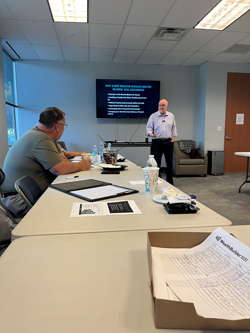
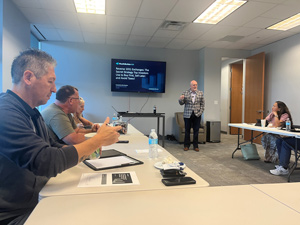
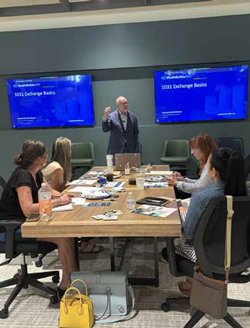
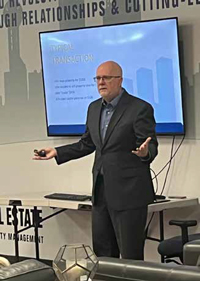
That philosophy extends beyond individual transactions. He speaks with investors and referral partners multiple times a week and has conducted more than 100 seminars and webinars in 2025. The goal is to help people understand the process before they are under pressure to make decisions.
 WealthBuilder also tries to remove friction from the transaction itself. Once it has the information needed to prepare documents, the company sends them directly to the client rather than waiting for a title company to circulate them. Clients can review and sign documents months before closing, allowing the 1031 process to get underway early and reducing the risk of an important step being forgotten.
WealthBuilder’s involvement also extends beyond preparing the required paperwork. The company maintains a clear point of contact for each investor, with trained employees available to answer routine questions and help clients understand what needs to happen next. Peterson says accessibility is an important part of the service, particularly when investors are navigating a transaction with multiple moving parts.
The company also extends that accessibility through its online resources. Its website provides capital-gain and deadline calculators, frequently asked questions and educational videos addressing common aspects of 1031 exchanges. WealthBuilder also uses social media and other digital resources to keep information readily available outside a transaction, giving investors another way to find answers when they need them.
From One Exchange to Long-Term Wealth
For Peterson, a 1031 exchange can also be part of a longer-term approach to building wealth. He calls it the “3D strategy of wealth creation” — defer, defer, die.
-
In 2009, I launched Brazos 1031 Exchange Company, later rebranded as WealthBuilder 1031 in 2022. The experience made the security of clients’ exchange funds a foundational priority for Wealthbuilder 1031.
The first ‘defer’ refers to using a 1031 exchange to defer taxes when selling an investment property, allowing more of the equity to remain invested rather than being reduced by an immediate tax bill. The second is the ability to continue deferring taxes through subsequent 1031 exchanges.
“There’s no limit to the number of 1031 exchanges you can do,” says Peterson.
 The final ‘die’ refers to the step-up in basis that may apply when property passes to heirs. For example, an investor owns a fully depreciated property worth $1 million, with a tax basis of effectively zero. Selling it before death could result in a substantial tax liability. If the investor dies while holding the property, however, the heirs may receive a new basis tied to the property's fair market value at death under applicable tax rules. In Peterson’s example, that difference could represent roughly $250,000 in tax savings.
Expanding the Next Chapter
Despite a more conservative real estate market shaped by interest rates, geopolitical uncertainty and tariffs, WealthBuilder has continued to grow. According to Peterson, 2026 is shaping up to be the company’s strongest year so far.
That momentum is also expanding its reach. WealthBuilder is building a stronger national presence as more investors look for ways to manage the tax implications of selling and reinvesting in real estate. Peterson is optimistic about the years ahead and conservatively expects the business to double in 2026, with similar growth possible in the following years.
For a company born from a transaction that went wrong, that lesson remains central. WealthBuilder is not simply helping investors complete 1031 exchanges. It is building a business around what Peterson learned when clients needed someone they could trust with both their money and their next move.
What Matters Most In A 1031 Intermediary
The difficult part of appointing a qualified intermediary is that much of the risk lies between two closings, when sale proceeds are out of the investor’s hands and federal deadlines are already running. In a deferred exchange, replacement property generally must be identified within 45 days and received within 180 days or by the applicable tax return due date, whichever comes first. If the intermediary causes those timing requirements to be missed, the exchange may fail to qualify for deferral. Price matters, but timing control and clean handoffs deserve closer scrutiny.
Fund custody should be examined before any exchange agreement is signed. The investor relies on an intermediary to hold proceeds that may represent years of accumulated equity, often while another property is still being sourced or financed. Account segregation, authorization controls, banking arrangements, and release procedures belong in the diligence process. Written safeguards matter most when they are easy to verify. Executives should also understand how funds are titled, who can move them, what approvals are required and how exceptions are handled.
Process discipline becomes equally important once the relinquished property is approaching closing. Document preparation should begin early enough that the exchange does not depend on a last-minute signature or an overlooked title-company handoff. Buyers should look for a defined point of contact and a clear division of responsibility around identification notices. Escalation routes and confirmation at each transfer reduce ambiguity when deadlines begin to compress. Documentation quality also affects post-closing review, especially when investors, tax advisers or auditors later need to reconstruct how proceeds moved and whether notices were delivered within the prescribed exchange window. A provider that leaves the exchange mechanics scattered across several parties can make a simple transaction harder to control.
“WealthBuilder1031 uses segregated exchange accounts and dual authorization on transactions, giving buyers two concrete fundcontrol measures to examine during diligence.”
Service breadth matters when the investor’s real estate strategy does not follow the standard sell-then-buy sequence. A qualified intermediary may need to support deferred, reverse, improvement and simultaneous exchanges without forcing the investor into a structure that fits the provider’s comfort zone. Reverse and improvement transactions can involve an exchange accommodation titleholder, additional documentation, lender coordination, and more complex deadline management. Buyers should determine whether the intermediary regularly handles those structures and can explain where its role ends.
Communication quality deserves separate scrutiny. Exchange rules are technical, but much of the day-to-day work is procedural. Investors benefit from plain-language guidance before closing and ready access to answers while the transaction is moving. Useful education should clarify deadlines and responsibilities without drifting into tax advice that belongs to the investor’s CPA or attorney. Effective service models make it easy to understand what must happen next and who is responsible for making it happen.
WealthBuilder1031 facilitates deferred, reverse, improvement and simultaneous exchanges nationwide and prepares exchange documents for early digital signature. Clients receive a clear point of contact and trained staff address procedural questions directly. Educational resources explain deadlines in plain language before closing pressure builds. WealthBuilder1031 uses segregated exchange accounts and dual authorization on transactions, giving buyers two concrete fund-control measures to examine during diligence. Those controls sit alongside a process designed to reduce forgotten signatures and unclear handoffs. For investors comparing qualified intermediaries on custody safeguards, deadline discipline, communication quality, and exchange breadth, WealthBuilder1031 merits consideration as a practical option without adding another late-stage dependency to the closing.
...Read more
