
Thank you for Subscribing to Real Estate Business Review Weekly Brief
Real Estate Business Review: Specials Magazine
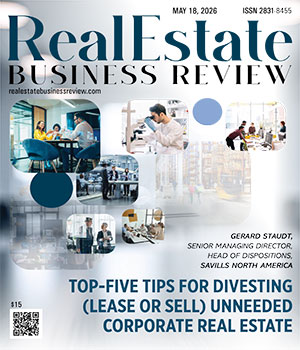
The world of selling and leasing excess real estate (dispositions) is fraught with pitfalls. Many companies find book values and appraisals higher than what the market will pay. Transactions can unravel due to complexities that non-disposition specialists encounter when disposing of excess space, often because they do not have the necessary dedicated expertise. While typical real estate service firms have individuals conducting acquisitions (securing new space) and dispositions (leasing and selling surplus space), the market does not generally offer dedicated individuals whose focus is solely on selling and leasing corporate excess space. Gerard Staudt, President of CoreDispo’s dedicated Global Real Estate Leasing and Sales Team, gives his top five tips for divesting (leasing and sales of) corporate real estate. “The world of selling and leasing excess real estate (dispositions) is fraught with pitfalls. Many companies find book values and appraisals higher than what the market will pay.” 1. Have the necessary corporate approvals in place prior to marketing. Corporations with excess space often go to market without having approvals required to complete the transaction. This can result in corporations taking 20-to-30 percent of property off the market after they have spent an enormous amount of time and money marketing it. (Details in full article). 2. Whenever you conduct a sale or lease, you must do your homework upfront. It’s far better to address issues at the start of a process rather than wait for them to be uncovered on the day of the deal. First, this information allows the corporation to make an educated decision of whether they are prepared to dispose of the space before going to market and, second, if they do go to market, the data allows the tenant or buyer to make a quicker decision on whether the site works for them or not. (Details in full article). 3. Learn and understand the competition to set terms and prices.
Top Real Estate and Property Management Firm 2026
Recognized as a Top Real Estate and Property Management Firm for 2026, Denali Real Estate has built its reputation by serving as a long-term operating partner to real estate investors. The firm’s approach centers on disciplined operations, transparent communication, and the alignment of interests between owners, tenants, and the management team. In an industry often defined by transactional relationships and short-term decision making, Denali has pursued a different model. Rather than treating property management as a service transaction, the company works alongside investors to help protect asset performance, maintain stable tenancy, and support the long-term health of their portfolios. Denali built its model around a simple premise. When property managers benefit from tenant turnover or vacancy, incentives can drift away from the owner’s interests. A management structure designed around stability and long-term tenancy keeps priorities aligned around consistent property performance. For Denali, alignment begins with structure rather than slogans. The firm’s operating framework ties its success directly to investor outcomes. Instead of emphasizing short-term leasing activity, Denali focuses on tenant stability, predictable cash flow, and long-term property performance. Owners maintain transparency throughout the process and can remain closely involved in decisions affecting their properties. “It is really important that the company is aligned with the property owner. It cannot just be a tagline. It has to be built into how the company is structured so that it creates a true partnership,” says Michael Van Vleck, Designated Broker..

Top Architects and Urban Planning Services 2026

Urban planning projects often face a fundamental challenge in aligning diverse stakeholders around a shared vision. Differences in priorities, timelines and expectations can slow progress and create disconnects between planning intent and implementation. Vertical Arts Architecture addresses this by prioritizing an early, interactive envisioning process that brings stakeholders together. The firm emphasizes listening and understanding site constraints, community needs and long-term goals before design begins. “We feel passionately about an upfront, interactive envisioning process where we delve into site constraints and talk with community stakeholders to listen and understand the project in a deep, meaningful way,” says Sarah Tiedeken O’Brien, partner. Integrating Stakeholder Input into Early Design A major issue in urban planning is ensuring that the big-picture vision aligns with actionable steps. Without early alignment, projects risk delays or outcomes that do not reflect community priorities. Vertical Arts Architecture approaches this through collaborative workshops and early-stage engagement. Its integrated team structure allows architecture, landscape and interior design to be considered together from the beginning.
CXO INSIGHTS

Transforming Uncertainty Into Opportunity: The Power of Analytics in Commercial Real Estate
Bret Swango, SVP, Head of Location Intelligence & Workforce Analytics, Colliers

Disaster Recovery is a Team Sport
Jim Wills, Vice President of Business Development- GRS, Gilbane Building Company

Expect Video Content Creation Platforms for CRE Brokers
Rob Nielsen, Executive Vice President - Corporate Real Estate Brokerage, Jones Lang LaSalle Brokerage, Inc. [NYSE: JLL]

Preparing an Operational Facilities Expense Budget
Baris Sevinc, Senior Facilities Service Director, Equity Residential [NYSE: EQR]

Key Strategies For Successful Proptech Implementation In Real Estate
Weyen Burnam, Chief Construction/Development Officer, StorageMart

The Importance of Tenants
Shari Barnes, Property Manager, Boston Properties [NYSE: BXP]
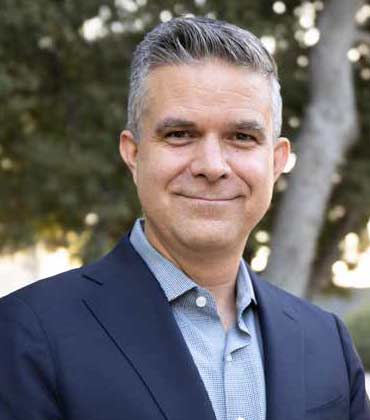
When Trust is Gone: Why Character is the Cornerstone of Real Estate
Matthew Holbrook, CEO, Action Property Management


IN FOCUS

Brokers in the Digital Age: Maximizing Efficiency in Commercial Real Estate
Hiring a commercial real estate broker offers expert knowledge, time savings, and enhanced access to networks in a changing market.
Strategic Expansion in Real Estate and Property Management Markets
Real estate and property management firms grow through digitalization, smart technologies, sustainability initiatives, urban demand, and data-driven operational optimization strategies.
EDITORIAL
Shaping Long-Term Value in Real Estate
Real estate performance continues to be shaped by a sharper focus on operational discipline, asset resilience and strategic portfolio decision-making. This edition examines how owners, operators and advisors are strengthening long-term value through disciplined management practices, smarter capital planning and execution-led real estate strategies.
Denali Real Estate, recognized as the Top Real Estate and Property Management Firm 2026, reflects this shift through a model built around alignment, stability and measurable investor outcomes. Rather than approaching property management as a transactional function, Denali positions it as long-term asset stewardship, combining disciplined tenant screening, transparent maintenance oversight and operating structures designed to support tenancy stability and predictable cash flow. Its emphasis on incentive alignment and portfolio protection demonstrates how property management can drive sustained asset performance.
This edition also underscores how operational rigor extends beyond management into broader real estate strategy. Denali’s recognition reflects a wider industry movement where disciplined execution, risk awareness and investor-focused decision-making are increasingly defining competitive advantage. Through structured growth built on outcomes rather than volume, the firm represents a model of long-term value creation grounded in operational fundamentals.
Contributors in this issue reinforce those themes from complementary perspectives. Gerard Staudt, Senior Managing Director, Head of Dispositions at Savills North America, examines disposition strategy as a discipline rooted in timing, due diligence and stakeholder coordination, highlighting how proactive planning and market precision can preserve value in dynamic conditions. Baris Sevinc, Senior Facilities Service Director at Equity Residential, brings focus to budgeting as an operational lever, emphasizing structured expense planning, capital prioritization and continuous monitoring as critical to sustaining property performance.
Across this edition, long-term success in real estate consistently comes down to disciplined execution, informed leadership and strategic stewardship. We invite readers to explore these perspectives and engage with approaches helping define the sector’s next phase.
