

Thank you for Subscribing to Real Estate Business Review Weekly Brief
Real Estate Business Review: Specials Magazine

Lument Finance Trust, Inc. (NYSE: LFT)
Disciplined Capital for the Multifamily Middle Market
Lument Finance Trust, Inc. (NYSE: LFT) operates in a defined and demanding lane of real estate finance. Structured as a REIT focused on commercial real estate debt investments, it emphasizes middle-market multifamily assets, giving borrowers and investors a clear view of how its capital supports properties that need financing before full stabilization. Transitional floating-rate commercial mortgage loans form the core of Lument Finance Trust’s investment strategy. These loans fit properties moving through acquisition, lease-up, renovation, refinancing or repositioning. Rather than treating multifamily finance as a broad lending field, it concentrates on assets where sponsor experience, property economics and market depth can be evaluated through disciplined credit judgment. Lument Finance Trust converts the complexities of the market into a more readable form of capital decision-making. Borrowers frequently encounter issues of time gaps existing between the current performance of the property and the future value after stabilization. It addresses this gap through the use of an approach based on specified collateral, sponsors' past performance and loan structures. Underwriting Built for Transitional Assets Lument Finance Trust’s underwriting method begins with selectivity. Typical loans are tied to experienced sponsors, specific real estate sectors and geographic markets with identifiable demand drivers. This focus helps separate projects that merely need capital from projects where a credible sponsor plan, local housing need and asset-level execution path support the investment case. Loan structure reinforces that discipline. Lument Finance Trust generally targets loan balances above $5 million, with ratios tied to current value and stabilized value. Floating-rate loans are commonly built around a three-year term with extension options, giving sponsors flexibility while allowing it to monitor progress against the original business plan. The advantage for the client is one of application and not one of rhetoric. A sponsor can produce an asset that has not yet achieved its intended earning capacity, while the finance structure allows for that transition. Its strategy enables the transformation of uncertainty of time into a managed credit position, where capital facilitates movement towards intended performance. A Platform Connecting Origination and Oversight Externally managed by Lument Investment Management, an affiliate of ORIX Corporation USA, Lument Finance Trust gains access to a broader real estate finance platform with national origination reach and asset management depth. The structure matters because effective mortgage investment depends on deal access and disciplined follow-through after funding. The platform connectivity helps in procurement, due diligence, portfolio analysis and asset monitoring in changing market environments, as well as provides an enhanced perspective of the needs of the borrowers and their properties. Credit decisions made for multifamily investments hardly depend upon a single data point, and Lument Finance Trust’s model reflects that reality through coordinated review across loan selection and portfolio management. Sample financing transactions highlight the magnitude that its structure is capable of supporting. For instance, Lument Finance Trust completed a managed commercial real estate collateralized loan obligation consisting of first-lien floating-rate mortgage loans and participations on multifamily and commercial real estate property in the U.S. This demonstrates its capability of tying loan level approach to capital markets execution.
-1-ptk4c-.jpg "Lument Finance Trust, INC. (NYSE: LFT): Disciplined Capital For The Multifamily Middle Market")
Property Management
Green Keys Property Management
Managing Rental Complexity with Structure and Clarity
Gail E. Scott, Founder and President
What challenges do property owners face when managing rentals without professional support? Many property owners come to Green Keys Property Management after struggling with self-management or becoming frustrated by poor communication from previous property managers. Recurring maintenance concerns, along with the complexities of landlord-tenant law in Portland, often create strained dynamics between owners and tenants. Green Keys assumes day-to-day tenant communication, maintenance coordination and regulatory compliance, allowing owners to step back from operational pressures. It supports owners in navigating landlord-tenant regulations while maintaining direct, consistent communication and providing advance visibility into repair costs and expenses. “Our number one value proposition is that we turn rental real estate into positive cash flow to ensure owners receive steady, on-time income,” says Gail E. Scott, founder and president. The Mechanics of Stable Rentals How does tenant screening and property monitoring contribute to stable rental operations? At Green Keys, tenant screening is guided by clear, rigorous criteria. Applicants must present a minimum FICO credit score of 650 and verified proof of net income. For freelancers or gig workers, the verification process involves reviewing pay stubs, bank statements and digital payment histories, including Venmo, Zelle and PayPal. This approach helps identify qualified applicants who are more likely to meet rental expectations and maintain consistent payments.

Real Estate Development

Multifamily property owners rarely share the same objectives. Some prioritize yield, others long-term value, and many operate within financing structures that impose strict compliance requirements. When management models rely on fixed processes, execution drifts from the original investment intent. SunRidge Management Group was built around that gap. As a third-party management company, it operates within defined responsibilities. It does not compete with its clients or invest alongside them. Its role is to manage assets entirely on their behalf, with the expectation that operations reflect the specific goals tied to each property. That distinction shapes every decision across the portfolio. “Our clients’ goals define how we operate. Everything we do is built around that,” says Ron Akin, owner. Headquartered in Dallas and operating for 36 years, SunRidge works with a client base that spans banks, real estate investment trusts, and single-asset family owners. The portfolio covers approximately 25,000 units across conventional, affordable, and specialty-designated communities, with a focus on assets of 100 units or more. To support that level of alignment, SunRidge keeps critical functions in-house. Accounting, IT, marketing, reputation management, and compliance oversight are all handled from the corporate office in Dallas. When a property's website goes down or a payment system fails, the corporate team responds directly. Technology support is treated as operational infrastructure, not a profit center, making it a cost-efficient resource for clients. The engagement follows an asset through its full lifecycle. Before a property changes hands, SunRidge supports due diligence through unit walks, file audits, budget and pro forma development, and direct feedback on whether projected rents are achievable. The company emphasizes transparency in evaluating deal viability and expected performance.
Building Maintenance Services
Every evening across more than 1,200 multifamily communities, the same well-coordinated routine unfolds. Residents place trash bags outside their doors before settling in for the night. By morning, the bags are gone, breezeways are clean, compactor areas are under control, and property management teams are not starting the day responding to waste complaints. Butler Plus is the company behind this efficient nightly operation, providing doorstep trash services designed to simplify waste disposal for multifamily communities of all shapes and sizes. “Conventional waste management was never designed around the resident, but we were from day one,” says CEO Mike Schmitt. “We treat doorstep collection as a resident experience, not a waste problem.” Established by co-founders Nick Friedman and Omar Soliman 13 years ago, this philosophy continues to guide Butler Plus’ growth, with the company providing doorstep trash services for more than 350,000 units in cities and states from coast to coast each night.

HOA Management
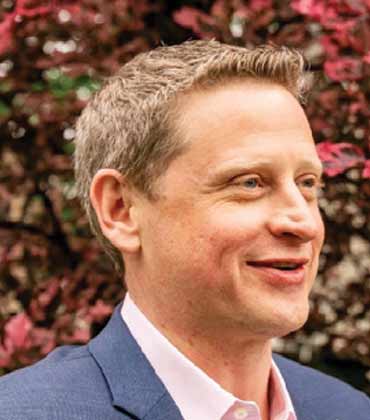
Challenges For Established Brokerages - The Tech Stack
John Currie, SVP of Operations, Weichert, Realtors
HOA Management

When Trust is Gone: Why Character is the Cornerstone of Real Estate
Matthew Holbrook, CEO, Action Property Management
Commercial Property Management

Procurement Technology Trends in Multifamily Property Management
Jaren Miller, Director of Procurement, Greystar
Commercial Property Insurance
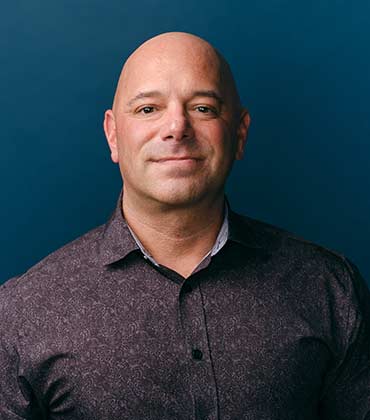
Building a Proactive and Aligned Safety Culture in Construction
Paul Stone, Environmental Health & Safety Director, Haugland Group LLC
Commercial Property Management

Leadership Shapes Multifamily Resident Experience
Amy Barricelli, EVP Brand and Revenue Acceleration, RR Living

IN MY OPINION
Urban Planning and Design
Manufactured Housing and Opportunity Zones: A Practical Strategy for Expanding Housing Supply
Aaron Potter, VP of Sustainability and Urban Development, UMH Properties Inc

LAST WORD
Property Management
Creating More Certainty in an Uncertain Market
Will Holmes, Head of Partnerships, Opendoor
IN FOCUS

Embracing Innovation: Transforming Real Estate Investment and Asset Management
The real estate sector is transforming through technology, sustainability, and innovative strategies, enhancing decision-making and tenant experiences for long-term value.
Creating Secure Communities: Access Control in Mixed-Use Developments
Effective security planning combines access control, surveillance lighting, emergency preparedness and commercial and home security services to protect diverse communities.
EDITORIAL
Redefining Excellence in Real Estate
This edition of Real Estate Business Review examines how organizations are responding to rising operational complexity by strengthening service delivery, embracing digital capabilities and expanding access to quality housing solutions.
This edition honors Lument Finance Trust as the Top Multifamily Mortgage Investment Company 2026. Its investment strategy centers on transitional floating-rate commercial mortgage loans supporting middlemarket multifamily properties.
Butler Plus, recognized as Doorstep Valet Trash Services of the Year 2026, has redefined an often-overlooked aspect of multifamily operations by treating doorstep trash collection as an integral part of the resident experience. Built on consistency, cleanliness and communication, its operating model combines trained teams and technology to deliver dependable service across thousands of communities.
This issue also recognizes Green Keys Property Management as the Top Property Management Company 2026. This is achieved by conducting systematic tenant screenings, proactively communicating and effectively adhering to changing rules and regulations. By prioritizing transparency, responsiveness and problem-solving, the company protects properties and earns owner trust.
SunRidge Management Group named Top Multifamily Real Estate Management Services 2026. Operating exclusively as a third-party management company, it aligns every operational decision with each owner's investment objectives instead of relying on standardized processes. Its integrated in-house capabilities support the confident management of conventional, affordable and HUD-backed communities.
Will Holmes, Head of Partnerships at Opendoor, explains how digital tools can increase certainty, transparency and flexibility for buyers, sellers and agents without diminishing the value of trusted professional relationships. Aaron Potter, Vice President of Sustainability and Urban Development at UMH Properties, Inc., explores how manufactured housing and Opportunity Zones can work together to expand attainable housing through disciplined private investment and long-term community development.
Together, these stories demonstrate that lasting progress in real estate depends on operational excellence, thoughtful leadership and practical execution. We invite you to explore this issue and discover the ideas shaping stronger properties, more resilient communities and the future of the industry.
