

Thank you for Subscribing to Real Estate Business Review Weekly Brief
Real Estate Business Review: Specials Magazine

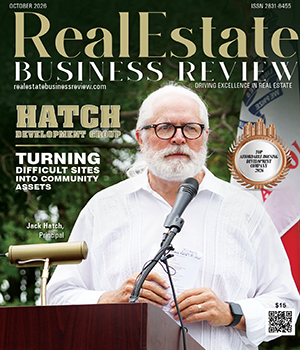
Hatch Development Group (HDG) finds its purpose where affordable housing has a bigger job to do. The Iowa-based developer builds affordable and mixed-income housing in areas where economic opportunity and broader community needs intersect. Whether redeveloping a flood-damaged neighborhood, building in an area facing unemployment or preserving a historic property, HDG takes on projects where conventional development can be difficult. “We build for the community and tenants,” says Jack Hatch, principal. “Then the investors will follow.” A former Iowa state senator who served in the legislature for 22 years, Hatch brings a deep understanding of how public policy and government decision-making shape housing development. His experience in public service has shaped a development philosophy centered on collaboration and civic engagement, with a focus on building projects that serve both residents and investors. HDG puts that philosophy into practice by working closely with residents, civic leaders, nonprofits, banks, private equity firms and government agencies to make complex projects possible and advance broader community priorities.
Top Property Management Services Company 2026
Today’s real estate investors expect more than basic property management. They want transparency, responsive communication, advanced technology, and a team that protects their investment as if it were their own. That’s exactly what Doorvest delivers. Over the past several years, Doorvest has grown from managing approximately 500 properties to more than 2,000 units across multiple states. More than 1,000 of those properties are located throughout Greater Cleveland and Northeast Ohio, where Doorvest has earned a reputation for exceptional service, operational excellence, and long-term client relationships.

Top Real Estate Title and Settlement Services 2026

Detroit in the early 2000s was not the easiest place to do title work. Foreclosure portfolios, blighted properties and REO assets with contested ownership histories were the files that defined eTITLE Agency ’s first decade. Deep land record research, curative expertise and disciplined execution that left no gap in the chain of title were not optional in that market. They were the baseline. Those standards have carried into every market eTITLE serves today. Founded in Michigan in 2000 by Linda Orlans and now led by her daughter, Alison Orlans, president and CEO, eTITLE is a certified woman- and family-owned title and settlement provider licensed in 18 states. It handles residential, commercial, government, REO, land bank and cannabis real estate transactions from headquarters in Troy, Michigan, with a second office in Leesburg, Virginia. “eTITLE Agency is not simply a title company that processes transactions. We’re a problem-solving organization. It’s really been built around trust, precision and personal accountability,” says Brian Henry, senior executive counsel. From Examination to Closing Every file at eTITLE is handled by a single coordinated team. In-house abstracting and examining, four title attorneys, cross-trained professionals and underwriter relationships work together from title search through closing. Lean Six Sigma methodologies and automated quality controls keep each stage accurate and on schedule. Clients always know who owns their file and who to reach when a decision is needed. Same-day responsiveness is expected, not exceptional.
Top Real Estate Investment Solutions 2026
Choosing a commercial real estate investment is only part of the decision. Investors must also decide who will stand behind it once the capital is committed. InCommercial Property Group makes that alignment tangible by investing alongside its clients. Investors are not simply asked to trust that their interests come first; the company commits its own capital to the same opportunities. “We’re in the deal with you,” says Erik Conrad, founder and CEO. “Our interests are not only aligned in our words but in our actions.” InCommercial keeps much of the investment lifecycle inhouse and concentrates on net lease convenience retail and motor fuel properties selected for their long-term utility. Keeping core functions close gives the firm greater control over information, execution and costs, helping avoid unnecessary expenses that can weigh on investor returns while keeping responsibility for critical decisions within the organization.

Top Earnest Money Payment Process Solutions 2026

Convenience and transparency have become defining expectations across the real estate transaction, driving the adoption of digital processes at nearly every stage. Yet earnest money, one of the most critical steps, has remained dependent on paper checks, manual verification and fragmented communication. Limited visibility leaves stakeholders uncertain about where funds stand, while manual verification processes add security risks and administrative burden. TrustFunds is changing that by bringing earnest money into the digital transaction workflow while building trust and visibility into every step of the process. The first company in the U.S. to facilitate digital earnest money, TrustFunds connects buyers, agents, brokers and designated earnest money holders through the same workflow. It modernizes trust in real estate by turning earnest money into a transparent and connected workflow within the multiple listing service (MLS) ecosystem. “We’re not simply digitizing a payment; we’re creating confidence among all parties involved in the transaction,” says Michelle Steinmetzer, President.
Top Property Tax Law Firm 2026
During a five day Texas jury trial in June, Raymond Gray, founding partner of Gray Winston, challenged the taxable value of an aging wind farm assessed at $159 million for one year and $139 million for the next. He argued the district’s valuations improperly included non taxable intangible business value under Texas law. The jury returned the verdict, reducing the assessments to $47 million and $37 million and awarding a $4 million refund, $650,000 in interest and the maximum attorney’s fee of $200,000. “We felt strongly about our position and stuck to our guns,” says Gray. “We prepare as though we’re going to trial and it gives us the leverage to reach the settlement and valuation that is most fair for our client.” It’s a conviction forged over years of advocacy on both sides of property tax disputes. Before representing property owners beginning in 1999, Gray represented appraisal districts and taxing units, giving him a clear view of how each side evaluates value, fairness and litigation risk. Independent Valuation, Not Negotiated Numbers Although property tax litigation centers on valuation, Gray Winston builds its own independent assessment of every matter. The firm conducts a full valuation workup, giving its lawyers a defensible basis for advice rather than relaying numbers between parties. Independence is essential because most engagements are on a contingency-fee basis. The firm shares economic risk with its clients, so each case rests on credible valuation analysis and a realistic potential outcome. That review determines whether a claim warrants filing and provides clients with candid guidance, even when it differs from their expectations. When analysis supports a claim that a property is overvalued or an owner received unfair treatment, Gray Winston prepares to carry the matter through trial regardless of size.
CXO INSIGHTS

Real Estate Transaction Management: Share knowledge and experiences with peers looking for directional support
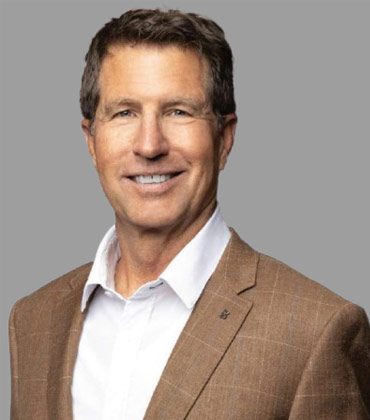
Tarrah Mueller, Senior Vice President, Director - Servicing Business Development, Northmarq

Revolutionizing Rental Housing: Exploring the Opportunities and Challenges of Build-to-Rent Communities
Brian Oates, Executive Managing Director of Development, RangeWater Real Estate

Unraveling the Dynamics of Commercial Real Estate: Navigating a Changing Landscape
Dylan Sproul, Senior Vice President, Transwestern

The False Enigma Of Using Ai In Real Estate
John Zhan, SVP, Data and Analytics, Anywhere Real Estate
CTRL + ALT + BUILD: Rebooting Real Estate with Tech
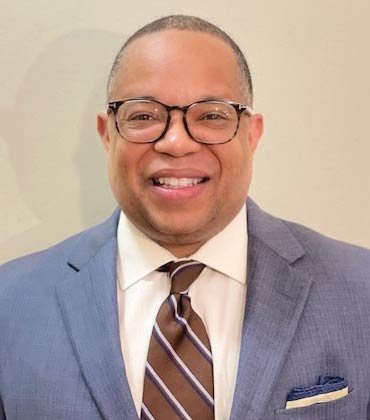
Allan Ragsdale, Property Manager, Mission Rock Residential, LLC

Strategic Investment Sales in Complex Market Conditions
Erik Russell Edeen, Principal & Senior Director of US Investment Sales, Avison Young

Designing World-Class Buildings With Preconstruction Expertise
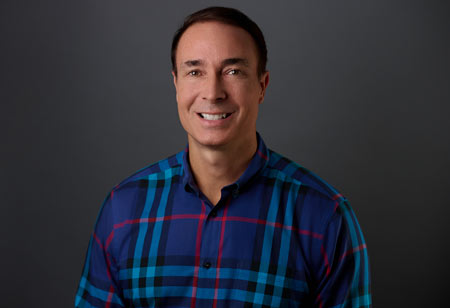
Michael J. Palumbo, Senior Vice President,Construction, Glenwood

IN FOCUS

Creating Sustainable Communities with Affordable Housing Development Companies
Affordable housing development companies enhance accommodation accessibility, construction efficiency, community development, and sustainable residential growth.

Property Management Services: Transforming Modern Real Estate Operations
Property Management Services streamlines property operations, strengthens tenant retention and supports regulatory compliance.
EDITORIAL
Building Value across the Real Estate Lifecycle
Real estate today demands more than successful transactions. This issue of Real Estate Business Review examines how developers, operators, legal specialists and technology providers are addressing affordability, investment discipline, transaction efficiency and long-term asset value.
Our cover story features Hatch Development Group, recognized as the Top Affordable Housing Development Company 2026. Its work indicates how affordable housing can serve broader community needs while remaining financially viable.
The issue extends this focus across critical areas of the real estate ecosystem. Doorvest, named Top Property Management Services Company 2026, combines property management with an ownerfacing technology platform, in-house maintenance and an investment marketplace, giving owners visibility across financial, leasing and maintenance activity. eTITLE Agency, recognized for Top Real Estate Title and Settlement Services 2026, combines the knowledge of the title process with technology designed to enhance transaction transparency while maintaining compliance and professionalism.
Gray Winston, awarded Top Property Tax Law Firm 2026, is differentiated by its independence in valuations and trial preparation. InCommercial Property Group, recognized for Top Real Estate Investment Solutions 2026, aligns its interests with investors by committing its own capital and maintaining key investment functions in-house. TrustFunds, named Top Earnest Money Payment Process Solutions 2026, brings digital tracking, verification and transparency to earnest money workflows.
The issue’s leadership perspectives add valuable operational depth. Mike Lentz, Executive Vice President, Development, Design and Construction, Host Hotels & Resorts, emphasizes asset-level risk analysis, disciplined capital planning and integrating resilience into construction and renovation decisions. Michael J. Palumbo, Senior Vice President, Construction, Glenwood, underscores the importance of preconstruction expertise and decades of field experience in identifying design decisions that can prevent costly problems.
These stories show how strong leadership and practical solutions can turn real estate challenges into lasting value. Explore the issue to examine the strategies shaping the sector’s next chapter.
